
Khachapuri Adjaruli: Georgian Cheese Bread
Khachapuri adjaruli is the boat-shaped Georgian cheese bread with a molten centre and a runny egg stirred in at the table. Here is how to make it at home.
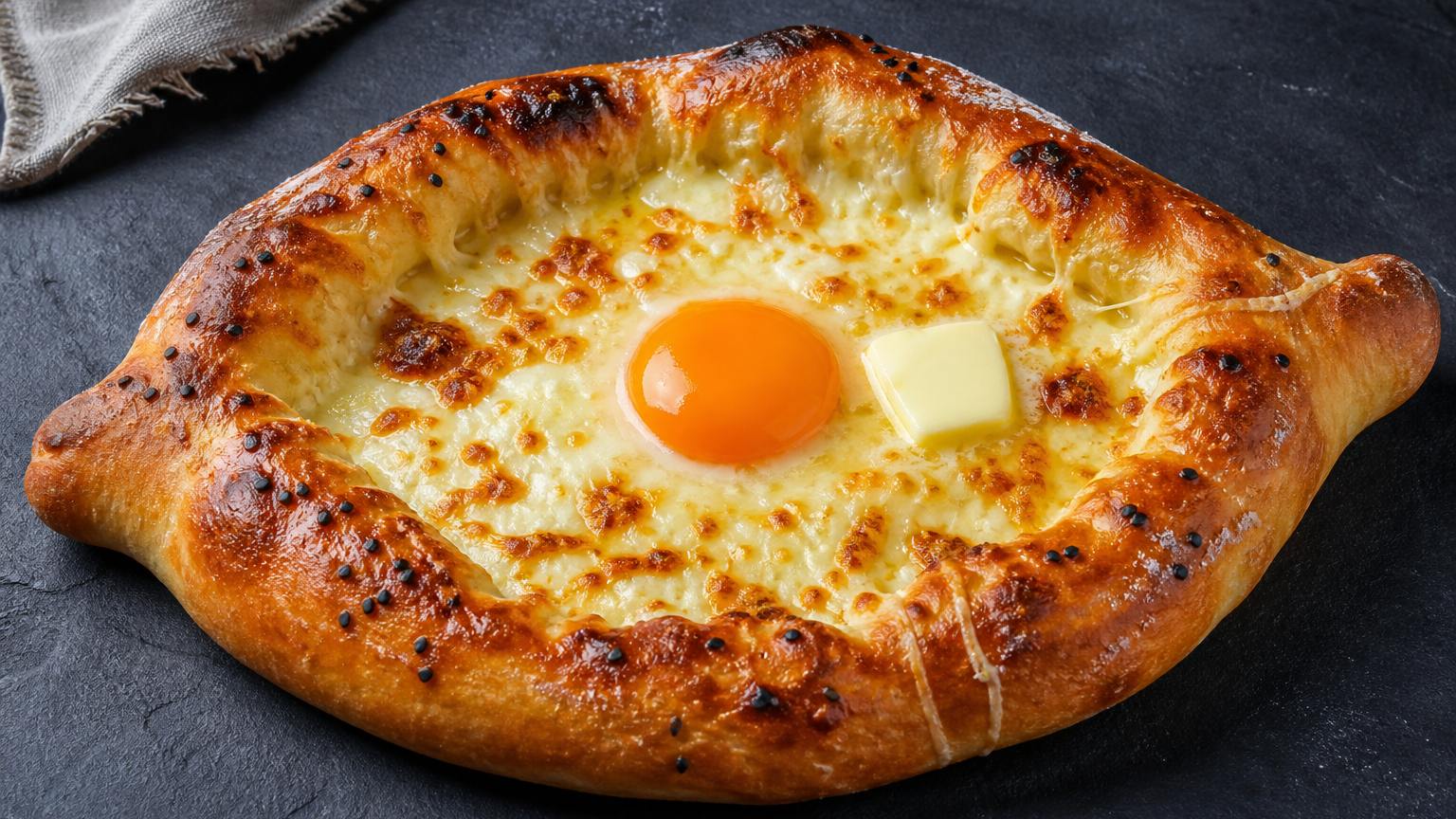
Few things at a table get a reaction like khachapuri adjaruli: a golden bread boat the size of a dinner plate, filled with molten cheese, a glossy egg yolk and a knob of butter waiting in the middle. It comes from Adjara on Georgia's Black Sea coast, where the boat shape is said to stand for a boat and the egg for the sun. This is how to make it at home: the recipe makes two boat-shaped breads and counts each as a serving.
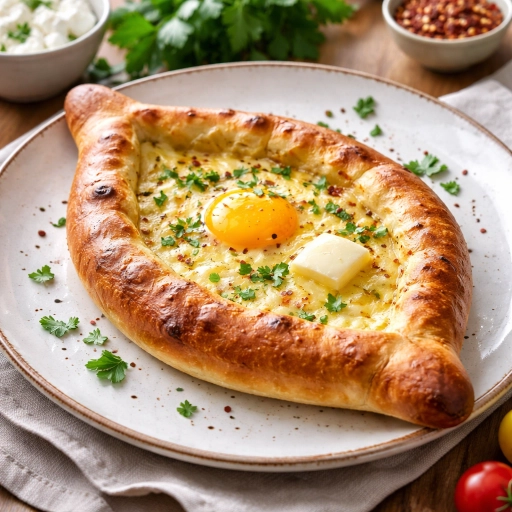
Adjaruli Khachapuri
A golden, boat-shaped Georgian bread with a crisp, enriched crust and a bubbling filling of mozzarella and feta. A raw egg yolk and butter are stirred into the hot cheese at the table, creating the dish’s signature creamy finish.
What makes khachapuri adjaruli
The shape is the signature: an open boat of enriched dough with a crisp, chewy rim and a pool of cheese in the middle. Straight from the oven a well is made in the centre, a raw egg yolk goes in with a knob of butter, and both get stirred through the hot cheese until the whole thing turns glossy and rich. It is a sharing dish by design, and an unapologetically indulgent one: one boat is counted as a serving and lands around 1,040 calories on Gourmate's per-serving estimate, with 43 g of protein and a lot of cheese. This is a treat, not a weeknight dinner.
The cheese is the whole point
In Georgia the filling is a mix of imeruli, a fresh, mild cheese, and sulguni, a stretchy, briny one. Outside Georgia they are hard to find, so this version uses 180 g of low-moisture mozzarella for the melt and stretch and 120 g of feta for the salty, tangy backbone. The combination gets close to the real thing.
Use low-moisture mozzarella, not fresh: fresh mozzarella holds too much water and turns the filling into a puddle. Keep the mix fairly coarse rather than finely blended, so it melts unevenly the way it should. One thing to watch is salt. Feta is already salty, and so is the cheese as a whole, so this is not a dish that needs seasoning on top, which our guide to how and when to salt food gets into.
The dough and the boat
The base is a simple enriched yeast dough: 250 g of strong white bread flour with yeast, a little sugar and salt, lukewarm water and milk, and a splash of oil. Bread flour matters here, because its higher protein gives the rim the chew and structure that holds the cheese without collapsing, which our guide to flour types explains. Knead it for five minutes until smooth, then let it rest ten while the oven heats.
Get the oven as hot as it goes, 240°C or higher, with a heavy tray inside so it is scorching when the bread lands. Divide the dough in two, roll each piece into a 25 cm oval, roll the long edges inward, pinch the ends together and open the centre to make the boat. Fill each with the cheese, slide them onto the hot tray on their baking paper, and bake for 10 to 12 minutes until the crust is deeply golden and the cheese is bubbling and browned at the edges.
The egg goes in last
Here is the part that needs care. Pull the breads out, press a shallow well into the cheese in each one, and crack an egg yolk into each well. Return them to the oven for one to two minutes, just until the whites are barely set and the yolks are still runny, then drop in the butter. That soft, barely cooked yolk is the traditional finish, and it is also a food-safety point, because a runny yolk carries a Salmonella risk.
FoodSafety.gov advises cooking eggs until both the white and yolk are firm to be safe from Salmonella. Plenty of people accept the runny yolk, but use pasteurized eggs to lower the risk, and cook the yolk through for anyone pregnant, over 65, under 5, or with a weakened immune system. The recipe flags the runny yolk as one to skip in pregnancy, and our guide to pregnancy-safe cooking covers how those calls get made. Wash your hands and anything that touched the shell, which our note on Salmonella in the kitchen gets into.
How to eat khachapuri
Serve it the moment it is out, because it is best while the cheese is still molten and stiffens as it cools. At the table, stir the butter and the runny yolk vigorously into the hot cheese until it turns into a single glossy, creamy pool. Then tear off pieces from the ends and the rim of the boat and dip them into the centre. That is the whole ritual, and it is meant to be a little messy.
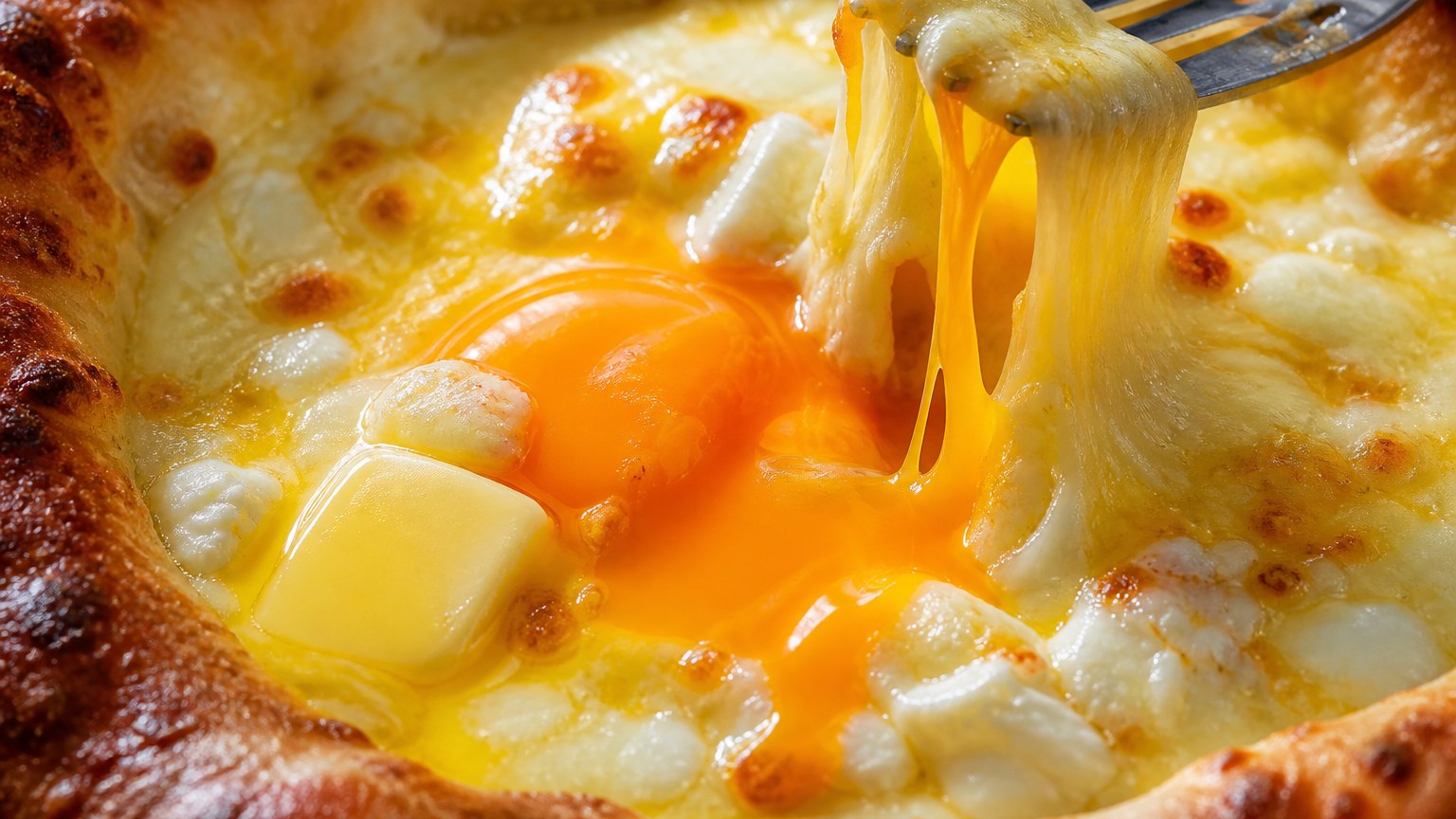
One honest caveat: a whole boat is the stated serving, but it is a big, rich thing, so many people share one between two with a sharp salad to cut it, which stretches the recipe toward four. A whole one to yourself is a commitment. It does not keep or reheat well either, since the point is the molten centre, so it is a make-it-and-eat-it dish rather than a leftovers one.
Allergens and who it suits
Khachapuri adjaruli carries three of the big allergens at once: dairy, from the mozzarella, feta and butter, egg, from the yolk, and gluten, from the wheat flour. None of them can leave without turning it into a different dish, so this is not one to adapt for a vegan, a coeliac, or an egg allergy. It is vegetarian as written.
It is also genuinely rich, at roughly 1,040 calories, 106 g of carbohydrate and a lot of saturated fat a serving, so treat it as the centrepiece of an occasional meal rather than an everyday bread. If you are pregnant, there are two things to check, not one: cook the yolk through, and make sure the feta is made from pasteurized milk, since some feta is not. Read the cheese labels, because both feta and mozzarella come in raw-milk versions in some shops.
The thing I like about khachapuri is that it turns a simple list of cheese, dough and an egg into an event. You bring it to the table whole and finish it there, and everyone leans in for the first stir of the yolk into the cheese.
Gourmate can scale this recipe to your table, translate it, and flag the allergens before you cook.