Salmonella in the Kitchen: What It Is and How to Prevent It
What salmonella is, which foods carry the highest risk, the cooking temperatures that kill it, and the cross-contamination habits that matter most at home.
Salmonella is one of the most common causes of foodborne illness, particularly in countries with high poultry and egg consumption. The US Centers for Disease Control and Prevention (CDC) estimates approximately 1.35 million Salmonella infections in the US each year, resulting in around 26,500 hospitalisations. Egg and poultry recalls make headlines periodically because these are the foods most consistently linked to the pathogen.
Understanding what Salmonella actually is, where it typically comes from, and specifically what kills it makes the risk easier to manage in a home kitchen.
What Salmonella is
Salmonella is a genus of bacteria that lives in the intestines of humans and animals. It's shed in faeces and can contaminate food at many points in the supply chain: on the farm, during slaughter and processing, in the packing facility, or in your kitchen through cross-contamination.
Salmonella does not change the smell, colour, or texture of contaminated food, which is why it's possible to eat contaminated food and not know until symptoms appear. The CDC notes that symptoms typically begin 6 hours to 6 days after infection. Symptoms include diarrhoea, fever, abdominal cramps, and vomiting, typically lasting 4-7 days. Most healthy adults recover without treatment; however, infants, elderly adults, pregnant people, and immunocompromised individuals face a higher risk of serious illness and complications.
Which foods carry the highest risk
Poultry: raw chicken and turkey carry Salmonella more consistently than almost any other food in the supply chain. The USDA estimates that a significant proportion of raw chicken sold in retail carries Salmonella, and the bacteria are found on the surface and sometimes inside the meat.
Eggs: Salmonella can contaminate eggs in two ways: on the shell (from the hen's environment) and inside the egg itself if the hen is infected. The shell contamination is why washing hands after handling eggshells matters. Internal contamination is why runny or raw eggs carry a risk that fully cooked eggs don't.
Raw produce: Salmonella can contaminate fresh fruits and vegetables through contaminated irrigation water, soil, or cross-contamination during handling and packaging. Sprouts, melons (particularly cantaloupe), tomatoes, and leafy greens have been implicated in outbreaks.
Unpasteurised dairy and juices: unpasteurised products haven't been heated sufficiently to kill bacteria. Pasteurisation specifically addresses Salmonella among other pathogens.
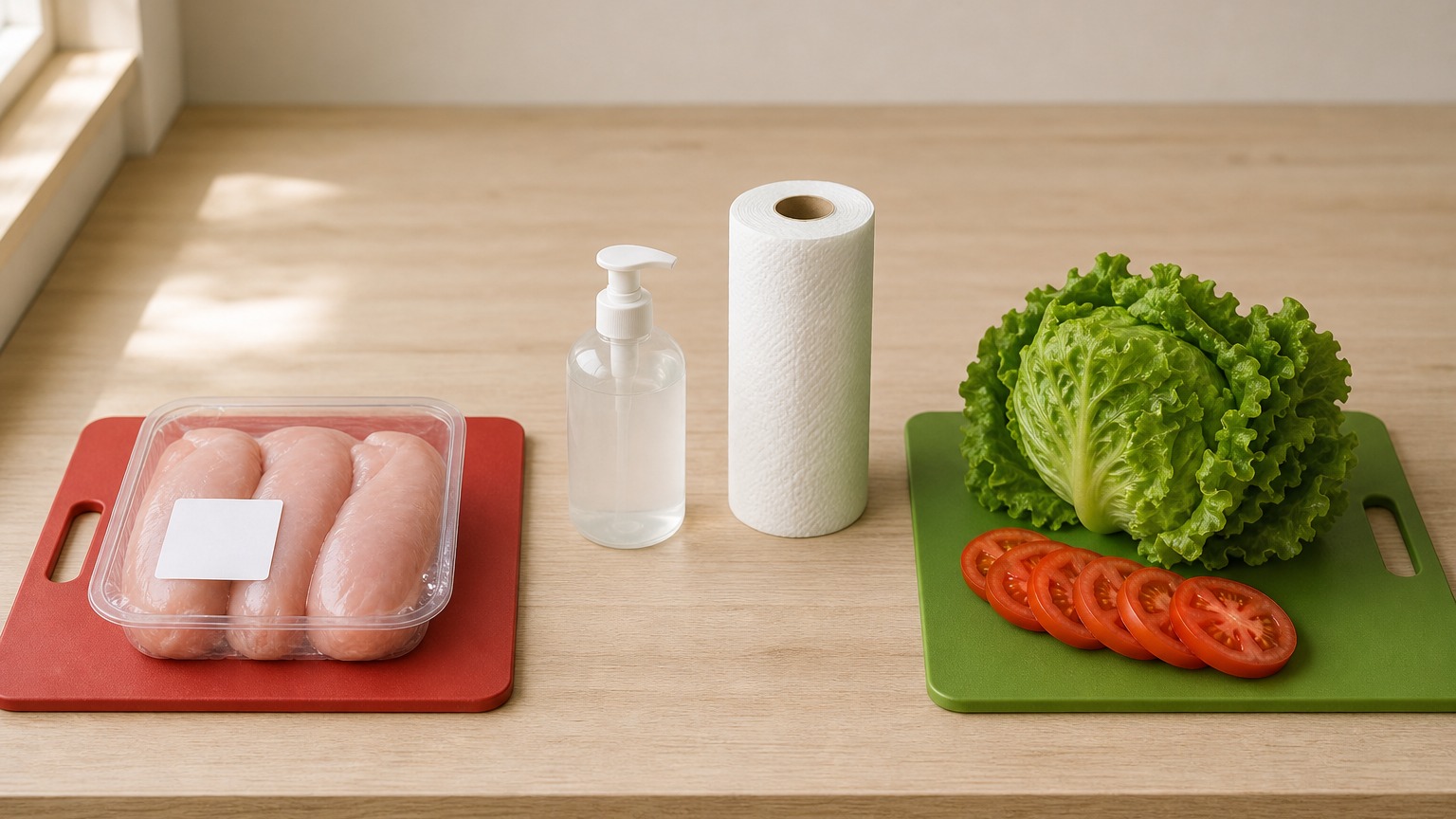
Cross-contamination from raw meat: a cutting board or countertop contaminated by raw poultry juice that then contacts salad greens or fruit is a well-documented route to illness. Keep raw poultry and its packaging away from any food that won't be further cooked.
The temperatures that kill it
Salmonella is reliably killed by adequate cooking heat. The relevant thresholds:
- Poultry (chicken, turkey): 74°C/165°F internal temperature at the thickest part of the meat, measured with a probe thermometer. Colour is not reliable: chicken can appear done before it's safe, and pink juices don't always indicate an unsafe temperature.
- Eggs: Salmonella in eggs is destroyed when both the white and yolk are fully set. Soft or runny yolks carry the residual risk described above. The CDC advises cooking eggs until both are firm for people in higher-risk groups.
- Other meats: the safe minimum internal temperature for whole-muscle beef, pork, and lamb is 63°C/145°F with a three-minute rest; for ground beef and ground pork it's 71°C/160°F, because grinding distributes any surface bacteria throughout. Ground poultry (chicken or turkey mince) requires 74°C/165°F, the same as whole poultry.
Cross-contamination: the most common kitchen failure
Cross-contamination is the transfer of bacteria from raw food to food that won't be cooked again before eating. It happens in predictable ways:
- The same cutting board: using one board for raw chicken and then cutting salad ingredients without washing is the classic example. Use separate boards, or wash the board thoroughly with hot soapy water between uses.
- Dripping packaging: raw chicken packaging that drips in the fridge can contaminate other foods below it. Store raw meat on the bottom shelf, in sealed packaging.
- Unwashed hands: handling raw chicken and then touching a door handle, salad greens, or a child transfers bacteria. Wash hands with soap for at least 20 seconds after handling raw meat.
- Kitchen towels: a towel used to dry hands after handling raw meat, then used to wipe a surface, can spread bacteria widely. Paper towels are safer for meat-handling contexts.
What to do with a recalled product
When eggs or poultry are subject to a recall, do not eat the product. Check the specific lot numbers against the recall notice, discard any matching product, and clean any surfaces it may have touched. Follow the recall notice and regulator guidance rather than attempting to salvage the product by cooking.
Medical guidance
If you develop symptoms that suggest Salmonella infection after eating potentially contaminated food, most cases resolve without specific treatment. However, seek medical attention if symptoms are severe (high fever above 39°C/102°F, prolonged vomiting that prevents fluid intake, bloody diarrhoea, or signs of dehydration), if you fall into a higher-risk group (infants, adults over 65, pregnancy, immunocompromised), or if symptoms don't begin to improve after several days. Do not take antibiotics without medical supervision: routine Salmonella gastroenteritis generally doesn't require them, and inappropriate antibiotic use contributes to resistance.
Safe food handling starts with planning. Gourmate's meal plans include allergen tracking and recipe suggestions that work for your household. Find out how the recipe discovery works.