
Moroccan Chicken Tagine with Preserved Lemon
A Moroccan chicken tagine with preserved lemon, green olives and chickpeas: one fragrant, light oven dish that tastes like it simmered for hours.
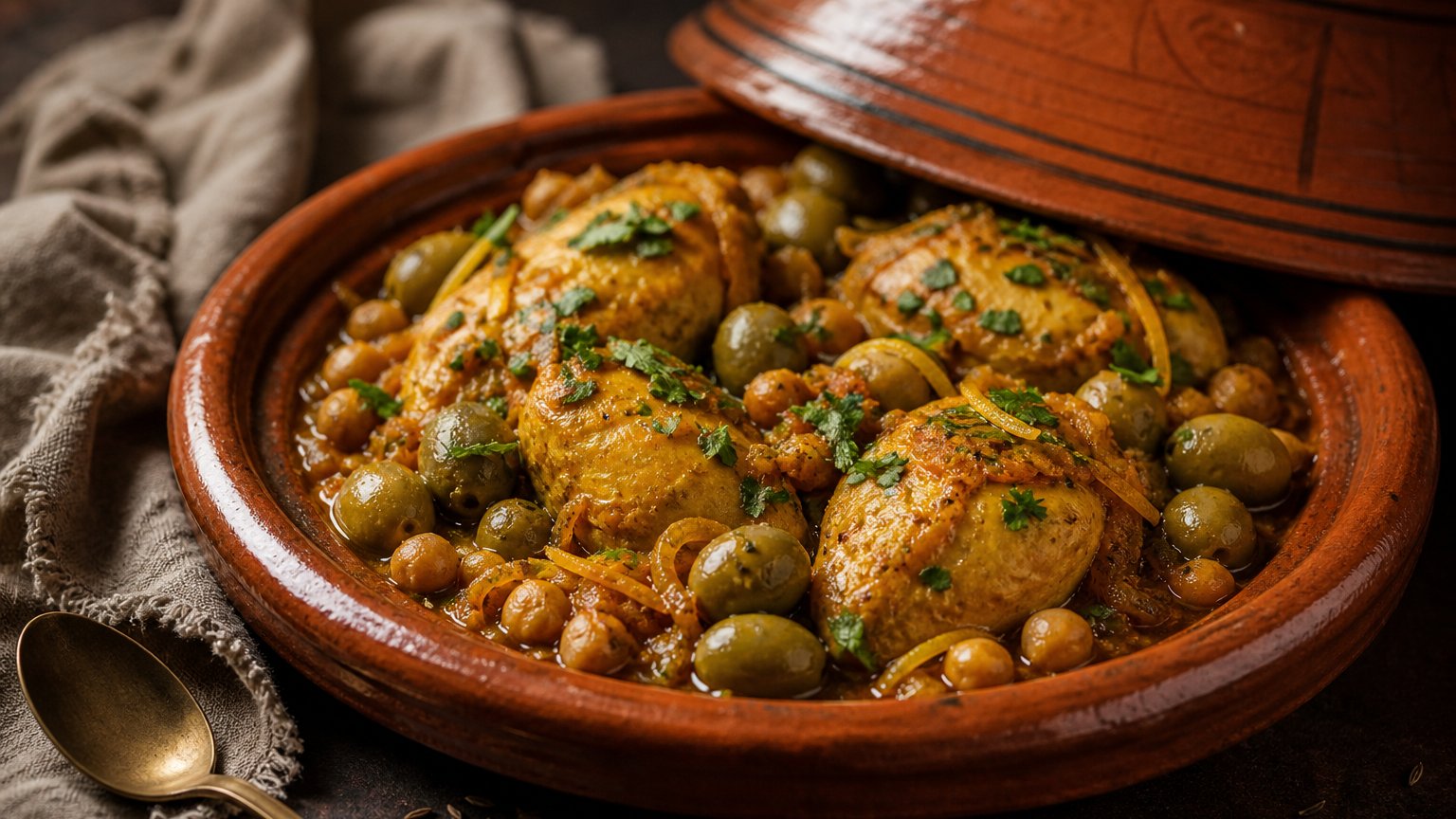
A tagine is really two things: the cone-lidded earthenware pot, and the slow-cooked stew that takes its name from it. This Moroccan chicken tagine is a classic version, chicken with preserved lemon, green olives and chickpeas, built to taste like it simmered all afternoon while actually spending most of that time alone in the oven. You do not need the clay pot to make it. A Dutch oven or any covered ovenproof dish with a tight lid stands in well; if you do use a real clay tagine, check it is oven-safe and follow the maker's soaking and heating instructions, since many are decorative.
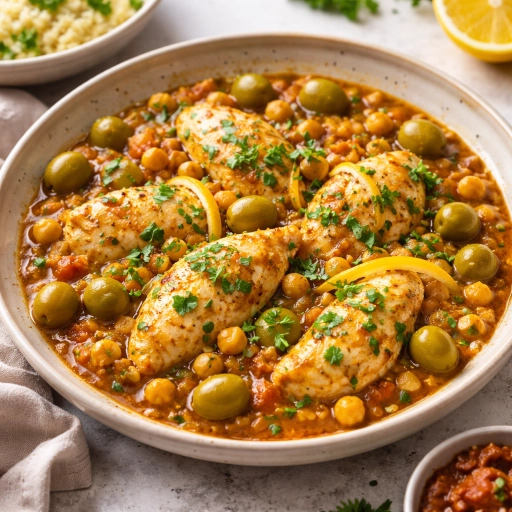
Tagine djaj bil hamd markad wa zaytoun
This tagine is fragrant with turmeric, cumin, coriander, and ginger, with tender chicken nestled in a light tomato-onion sauce. Preserved lemon and green olives bring the signature bright, salty depth, while chickpeas make it hearty without adding much fat. The result is comforting, aromatic, and satisfying while still feeling light.
The dish behind the pot
The traditional tagine is a shallow earthenware base with a tall conical lid that traps steam, letting a small amount of liquid cook the food gently without drying it out. This version keeps that idea but moves it to a covered dish in a 190°C oven, which is steadier than a low flame and easier to walk away from. It stays light, too: at roughly 326 calories and 38 g of protein a serving for two, with only 9 g of fat, on Gourmate's per-serving estimate.
The spice base is turmeric, cumin, coriander, ginger and paprika, rubbed into the chicken with sliced onion and garlic before anything cooks. That is the warm, earthy backbone of a Moroccan tagine, and there is no chilli heat in it, so it reads as fragrant rather than fiery. The recipe uses 300 g of skinless chicken breast cut into four or five large pieces rather than small cubes, because breast dries out fast and bigger pieces hold their juice. If you would rather not watch the clock, boneless thigh is more forgiving and stays tender even if it sits a few minutes longer.
Preserved lemon and olives do the work
The two ingredients that make this taste unmistakably Moroccan are preserved lemon and green olives. Preserved lemons are whole lemons packed in salt for weeks until the peel turns soft and intensely savoury, and it is the peel you want here, not the soft pulp, sliced thin. It brings a salty, almost floral citrus note that fresh lemon cannot, which is why it is worth buying a jar rather than substituting. If you make your own, our guide to quick pickles and preserving covers the salt-cure idea.
Green olives bring the other half, a briny bitterness that balances the sweet softened onion. Both are salty by nature, so they season the dish as much as they flavour it. If your preserved lemon is very salty, rinse the sliced peel briefly under cold water and hold back on any added salt. The 60 g of olives here are left whole, which looks the part and keeps them from turning the whole sauce sharp.
How to cook the Moroccan chicken tagine
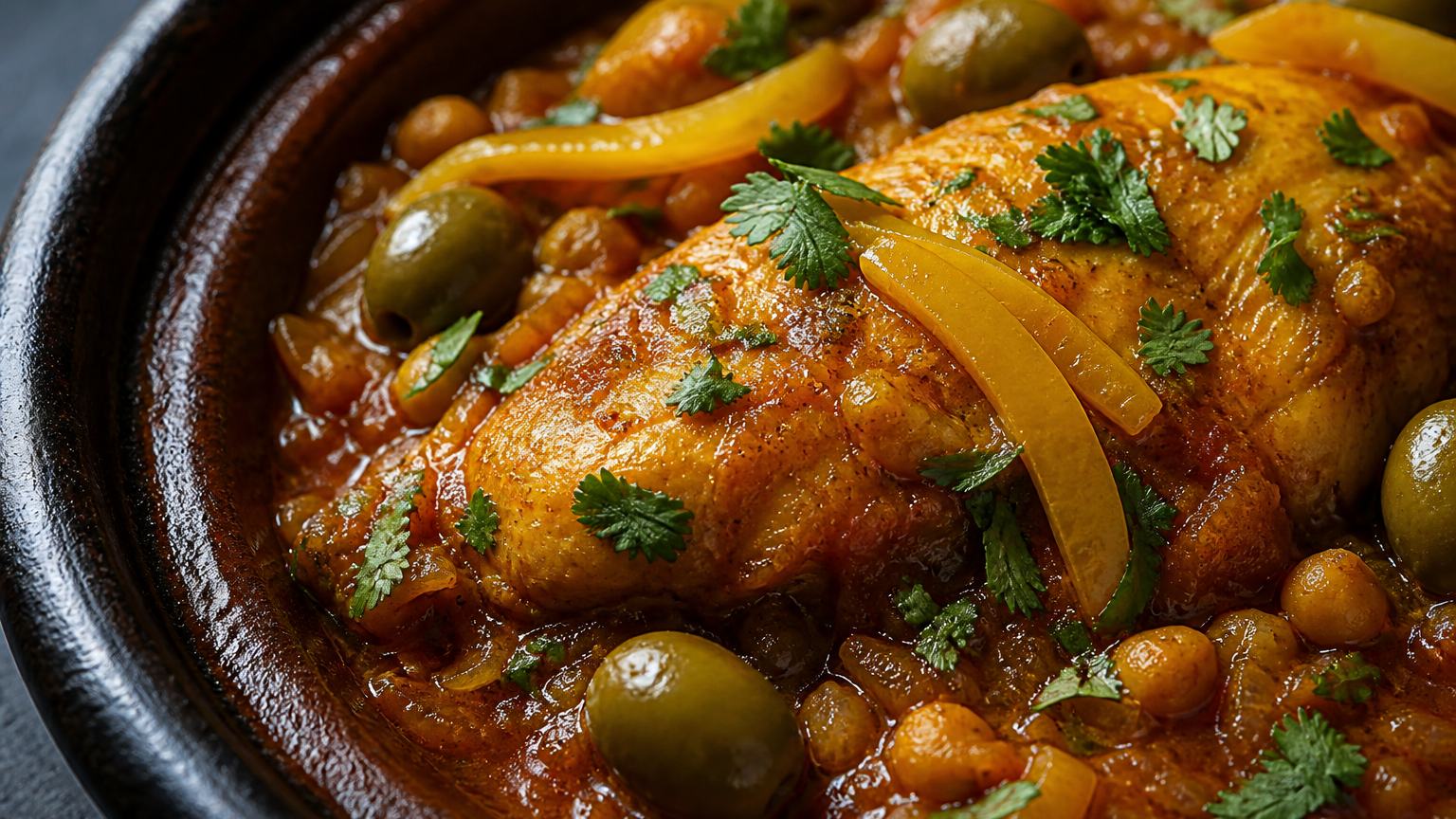
Combine the chicken, onion, garlic, spices, olive oil and 120 ml of water in an ovenproof dish and let it stand for ten minutes while the oven heats, which draws moisture from the onion and starts to season the meat. Scatter over 150 g of grated fresh tomato, 120 g of cooked or canned chickpeas, drained, the sliced preserved lemon and 60 g of green olives (pitted, or tell everyone about the stones), cover tightly with a lid or foil, and bake for 25 minutes. Then uncover, stir in fresh coriander, spoon the juices back over the top, and give it another eight to ten minutes uncovered to let the sauce reduce.
Chicken has to be cooked through, and colour is not a reliable test. The USDA sets the safe minimum for poultry at 74°C (165°F), so start checking when you uncover the dish and probe the thickest of a few pieces, since breast cooks fast and may already be there; if any piece is below 74°C, cover it again and give it a few more minutes, and lift out any piece that is done to rest while the rest catches up. Handle the raw chicken on its own board, wash your hands, the board and the knife in hot soapy water afterwards, switch to a clean spoon once cooking is under way, and do not rinse the raw chicken, since that splashes bacteria around the sink rather than removing them. Our note on Salmonella in the kitchen covers where the real risk sits. Rest the dish five minutes, then finish with parsley and a teaspoon of lemon juice, and refrigerate any leftovers within two hours in a shallow container, reheating them to steaming.
Season last, not first
This is a dish to taste before you salt. Between the preserved lemon, the olives and the half teaspoon in the spice rub, the sauce is close to seasoned already, so taste it after the rest and adjust rather than salting on the way in. Pull back further still if you are serving something salty alongside, which our guide to how and when to salt food gets into.
The chickpeas do more than bulk it out. They soak up the sauce and lift the whole dish to about 6 g of fibre a serving, which is what lets a lean chicken-breast dish still feel like a full plate rather than a diet one.
What to serve alongside
A tagine wants something to catch the sauce. Steamed couscous is the usual partner, plain bulgur does the same job, and warm flatbread turns it into a hands-on meal. For a lighter plate, a simple cucumber salad on the side is enough, and the chickpeas mean the tagine holds up on its own without a starch at all.
One honest caveat: chicken breast gives you a narrow window, so an overcooked tagine turns stringy no matter how good the sauce is. Those five minutes at the end are the one point in an otherwise forgiving recipe where timing matters.
Allergens and swaps
As written, this tagine is dairy-free and gluten-free, which is easy to lose the moment you serve it: couscous and bread both bring gluten, so a gluten-free plate means rice, the tagine alone, or a couscous explicitly labelled gluten-free. The flagged allergen to watch is sulfite, which green olives and some preserved lemons can carry as a preservative, so a sulfite-sensitive diner should check the jars rather than assume. It contains no nuts, egg or dairy of its own, though that still depends on the spice blends and brines you buy.
Read the labels either way, because olive and preserved-lemon brines vary by brand and some carry additives a bare ingredient list will not spell out. The chickpeas are a legume, worth naming for anyone who reacts to them. Boneless thigh is the easiest swap for the breast and, as above, the more forgiving choice.
The thing that makes this dish is the jar of preserved lemon in the cupboard. Without it you have a pleasant spiced chicken; with it you have a tagine, and it keeps for months once opened, so one jar carries you through many more.
Gourmate can scale this recipe to your table, translate it, and flag the allergens before you cook.