
Greek Summer Dinner: Salad, Lamb Chops, and Yogurt Dessert
A complete Greek summer dinner for two: village salad, grilled lamb chops with tzatziki, and yogurt with honey and walnuts. Three recipes, one relaxed evening.
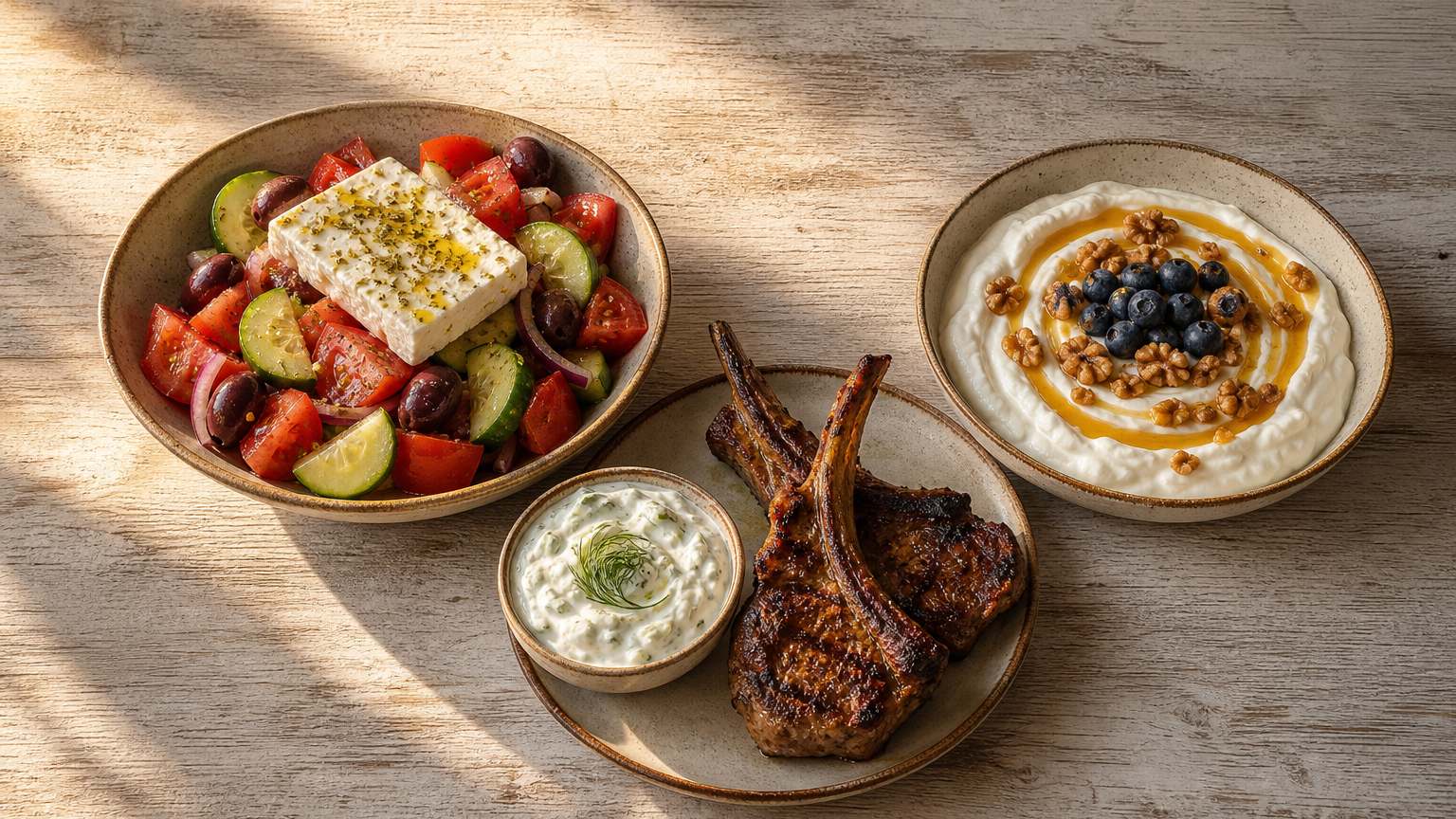
Greek cooking in summer is not especially complicated. It tends toward ripe produce dressed simply, a protein that's been marinated and grilled fast, and something cool and sweet at the end. What makes it feel deliberate is the sequencing: salad first while the grill heats, the lamb chops on while the salad is being eaten, the yogurt dessert waiting in the fridge.
This menu covers a simple Greek summer dinner with three recipes, none of which require more than 15 minutes of active cooking.
The salad: Horiatiki Salata
Horiatiki translates as village salad, and it is Greece's most recognised everyday dish. The version in the recipe uses thick-cut cucumber, tomato wedges, red onion, Kalamata olives, and a slab of feta, dressed with extra-virgin olive oil, lemon, and dried oregano.
The key difference between a good Horiatiki and a mediocre one is tomato quality. Because nothing is cooked, everything depends on the raw ingredients. In July and August, this is the best time to make it: full-season tomatoes, bought at a market if you can find them, are genuinely different from tomatoes in winter. The recipe notes say to eat it within 15 to 20 minutes of dressing; left longer, the tomato and cucumber start weeping liquid and the salad gets soggy.
This is the starter. Dress it just before you want to eat it, and serve it while the lamb is on the grill.
The main: Paidakia me Tzatziki
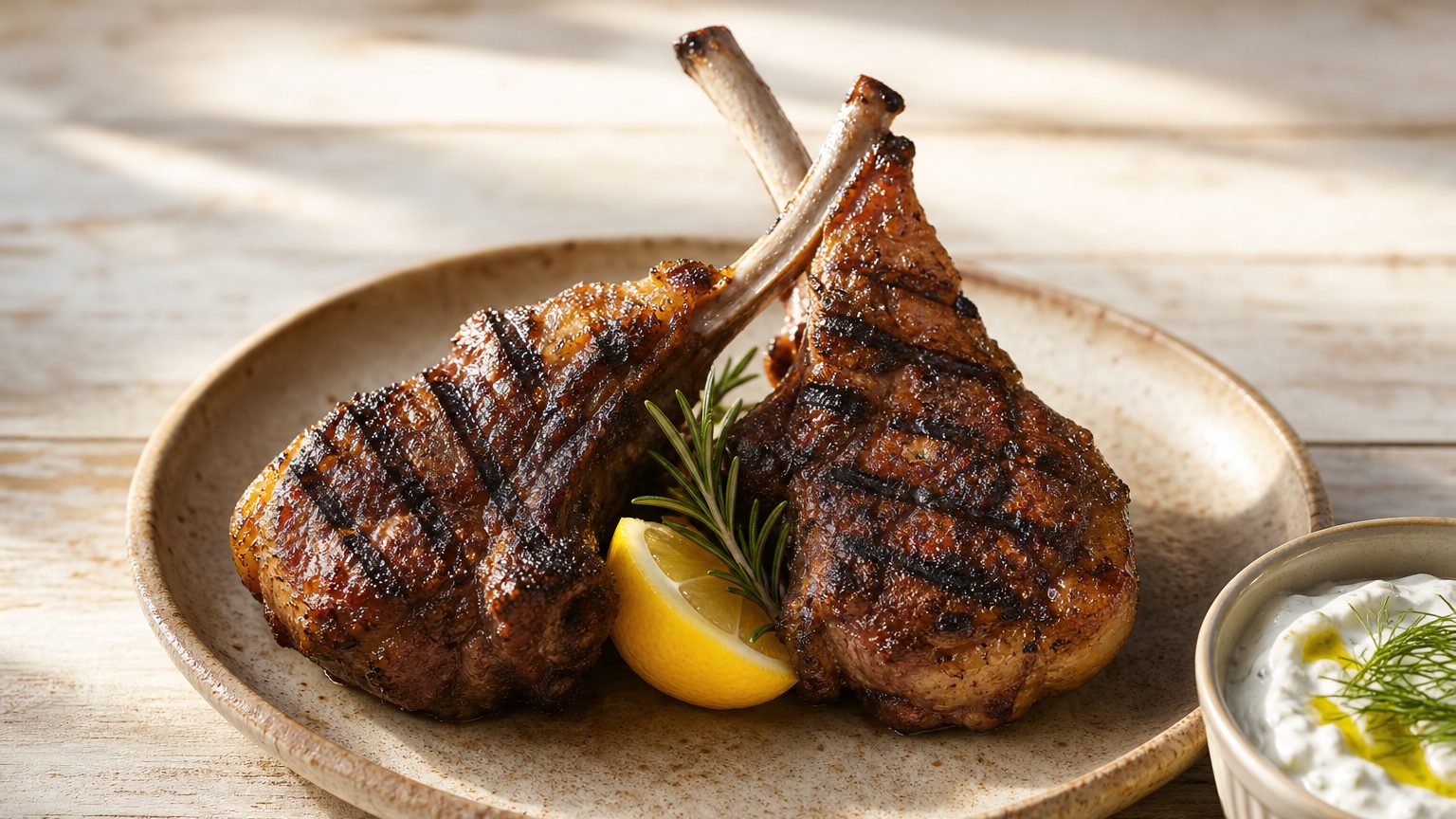
Paidakia are grilled lamb loin chops, and they're the centrepiece of this menu. The recipe marinates them briefly in rosemary, oregano, lemon zest, and olive oil, then grills or pan-fries them for about three to four minutes a side.
Lamb loin chops are a fast-cooking cut: thin, with the bone running through, and with a fat cap that renders quickly in a hot pan. The recipe's instruction is "deeply browned outside and juicy within." For food safety, whole lamb chops should reach at least 63°C/145°F internal temperature, followed by a three-minute rest (probe the thickest part, not touching bone). That gives a medium result with a slightly pink centre. Cook to 71°C/160°F for medium-well. Three to four minutes per side over high heat is a rough guide for 2 cm chops, but actual thickness and pan temperature vary, so probe rather than rely on timing alone.
The tzatziki is made alongside: Greek yogurt, grated cucumber squeezed dry, garlic, lemon, olive oil, and dill. The squeezing is the step people skip, which is why the sauce runs. Squeeze thoroughly and the result stays thick.
The dessert: Yiaourti me Meli kai Karydia
Yogurt with honey and walnuts shows up at taverna tables as both dessert and breakfast. The recipe uses full-fat strained yogurt, runny honey, roughly chopped walnuts, and a dusting of cinnamon. Blueberries are optional but fresh ones work well in summer.
Make it ahead and keep it cold until needed.
All three together
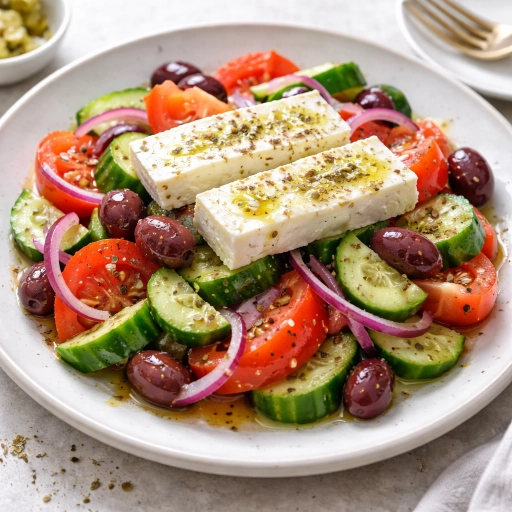
Horiatiki Salata
This crisp, juicy Greek village salad is bright with lemon, fragrant with oregano, and rich from creamy feta and peppery extra-virgin olive oil. Large-cut vegetables and briny olives give it a rustic, satisfying texture that fits perfectly into a keto meal.
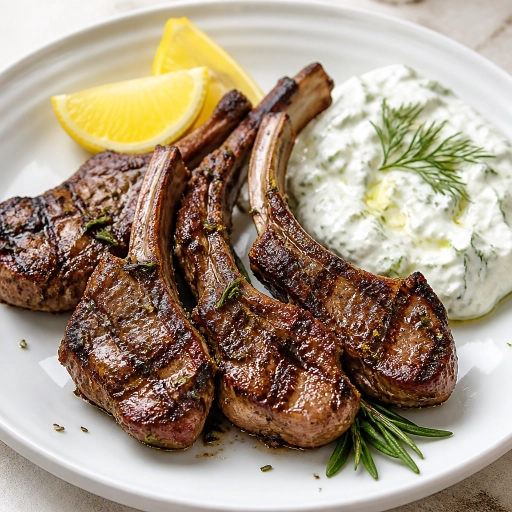
Paidakia me Tzatziki
These lamb chops are quickly grilled until deeply browned outside and juicy within, then paired with cool, garlicky tzatziki. The combination of rosemary, oregano, lemon, and rich lamb makes the dish bold, fresh, and satisfying while staying keto-friendly.
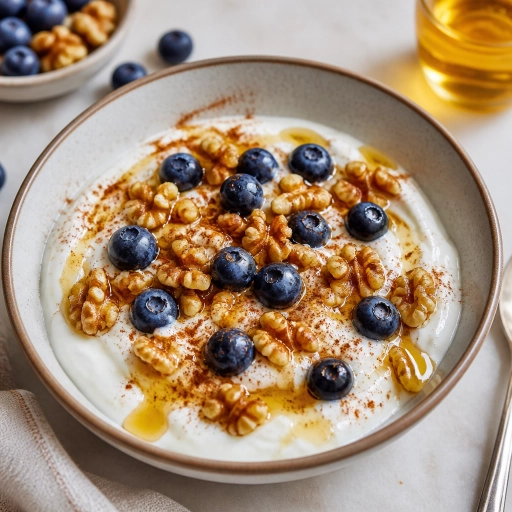
Yiaourti me Meli kai Karydia
This bowl is thick, cool, and creamy, with floral honey, warm cinnamon, juicy blueberries, and the earthy crunch of walnuts. It is simple, fast, and satisfying, with a naturally rich texture that makes it feel both wholesome and indulgent.
Gourmate's per-serving estimates: Horiatiki at 298 calories and 8.5 g protein; Paidakia at 546 calories and 36 g protein; the yogurt dessert at 337 calories and 13 g protein. These shift with the exact feta, lamb, and yogurt you use.
Allergens and food safety
Allergens across the menu: all three dishes contain dairy (feta in the salad and tzatziki; yogurt in the main and dessert). The dessert contains tree nuts (walnuts). The salad is free of tree nuts. If you're shopping for feta and yogurt, check whether they're made from pasteurised milk. Feta comes in both forms; anyone pregnant, under five, over 65, or immunocompromised should use the pasteurised version.
Raw lamb cross-contamination: keep the raw chops, their marinade, and any surface that touched them away from the salad, tzatziki, yogurt dessert, and serving plates. Discard any marinade that was in contact with the raw meat, or bring it to a boil before using it as a sauce. Wash your hands after handling the raw lamb and use a clean plate for the cooked chops.
Lamb chop doneness: as noted above, 63°C/145°F with a three-minute rest is the safe minimum for whole lamb cuts. Check with a probe thermometer in the thickest part, away from bone.
The tzatziki is a raw sauce: yogurt, raw garlic, and cucumber with no cooking step. Refrigerate it if you make it more than an hour ahead. Don't leave it out on a warm summer table for more than two hours (or one hour when the ambient temperature exceeds 32°C/90°F).
A note on the cuisine
Greek cooking varies across regions and islands; this menu isn't a survey of that diversity. What these three dishes share is the character of Greek summer taverna cooking: simple preparation, seasonal vegetables, and fast-grilled meat. There's no single authoritative version of any of them, and local preferences differ.
For more Mediterranean recipes, the summer mezze spread covers a Levantine mezze set using similar summer produce.
Want to find more seasonal menus that match your taste? Gourmate builds a personalised plan around what you like to eat. Find out how the recipe discovery works.