
How to Make a Pan Sauce: the Four-Step Formula
A pan sauce uses what's already in the pan after searing. Here's the four-step formula and three variations that work with chicken, fish, and pork.
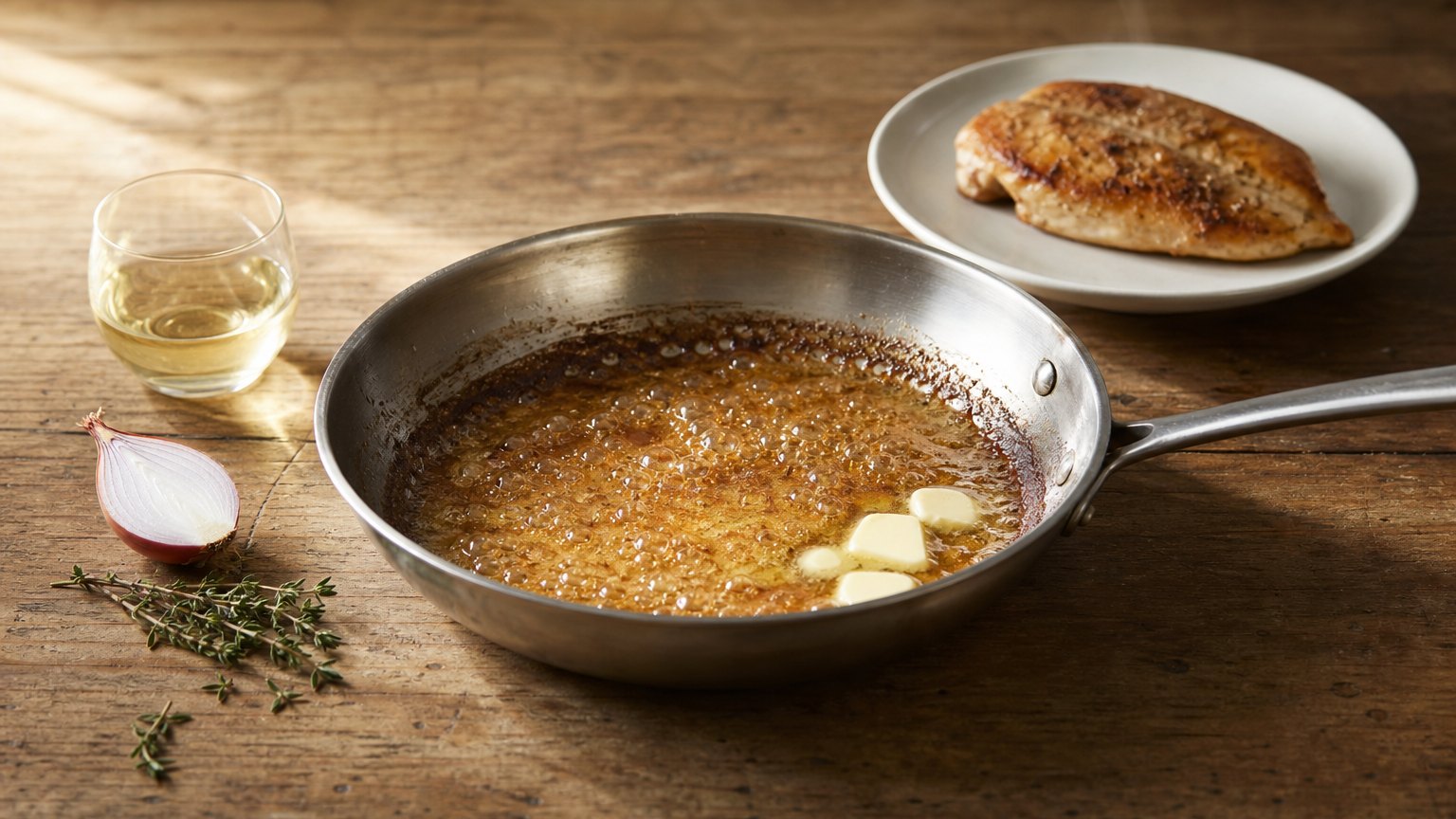
You sear a chicken breast or a piece of fish, slide it out of the pan, and there's a dark, caramelised layer stuck to the base. Most home cooks either toss it or scrub it clean. That layer is where the sauce lives.
A pan sauce is built from the browned residue left behind after searing or roasting a protein. It takes five to ten minutes, uses no extra equipment, and produces a sauce that actually tastes of the meal.
The fond: what you're actually working with
The sticky brown layer on the base of a hot pan is called the fond (from the French for "bottom"). It forms when amino acids and reducing sugars in the meat react at high heat, producing many new flavour compounds. Those compounds carry the colour and the flavour: savoury, slightly bitter if pushed too far, and concentrated in a way that unseared meat never achieves.
A liquid added to the hot pan dissolves the fond and pulls that flavour into the sauce. This is deglazing. Stainless steel and carbon steel pans build the best fond. Nonstick coatings produce much less adhesion, so the sauce has less to work with; avoid scraping hard on nonstick surfaces. Acidic liquids (wine, vinegar, lemon juice) should also be used carefully in unsealed cast iron, as they can strip the seasoning.
The four steps
1. Sear the protein and rest it. Get your pan to medium-high heat before the protein goes in. A drop of water should evaporate on contact. This is what creates the fond; too-low heat produces steaming and sticking instead. Once the protein is cooked (for chicken breast, probe the thickest part and check that it reaches 74°C/165°F; fish and pork have different targets), transfer it to a clean plate and let it rest. That window is when the sauce gets made.
2. Build aromatics (optional but useful). If the fond is dark brown and smells slightly bitter, deglaze immediately rather than adding aromatics first. If it looks golden-brown and good, pour off most of the fat, drop the heat to medium, and add a shallot. Cook for a minute or two until translucent; shallot burns quickly in a still-hot pan so keep it moving. Add garlic in the last 15-20 seconds. This adds a savoury base to the sauce. Skip this step entirely if the fond is at risk of burning.
3. Deglaze. Measure 100-150 ml of liquid into a cup before adding it to the pan. If you're using wine and cooking over a gas flame, pull the pan off the burner first: alcohol vapour from a bottle poured directly over a flame can ignite. Add the liquid and scrape the fond with a wooden spoon. It will bubble energetically on contact. White wine, chicken or beef stock (ideally unsalted or low-sodium, as reductions concentrate salt fast), cider, and water all work. Red wine works well with beef and lamb; give it an extra minute to reduce and mellow.
4. Reduce, then enrich. Simmer the liquid until it has reduced by at least half, tasting as it thickens. A sauce made from plain water or very lean stock may stay thin even when reduced; stocks that have gelatin (from bones) build body naturally, while butter, cream, or crème fraîche add it in other ways. At this point you can enrich it: a tablespoon of cold butter (about 15 g) stirred in off the heat gives the sauce gloss; two tablespoons of crème fraîche added while it still simmers gives a richer result; a small spoonful of Dijon mustard adds sharpness; a squeeze of lemon brightens it.
Taste before serving and season carefully, especially if you used a salted stock.
A pan sauce built from good fond and a concentrated stock needs nothing extra.
Three variations
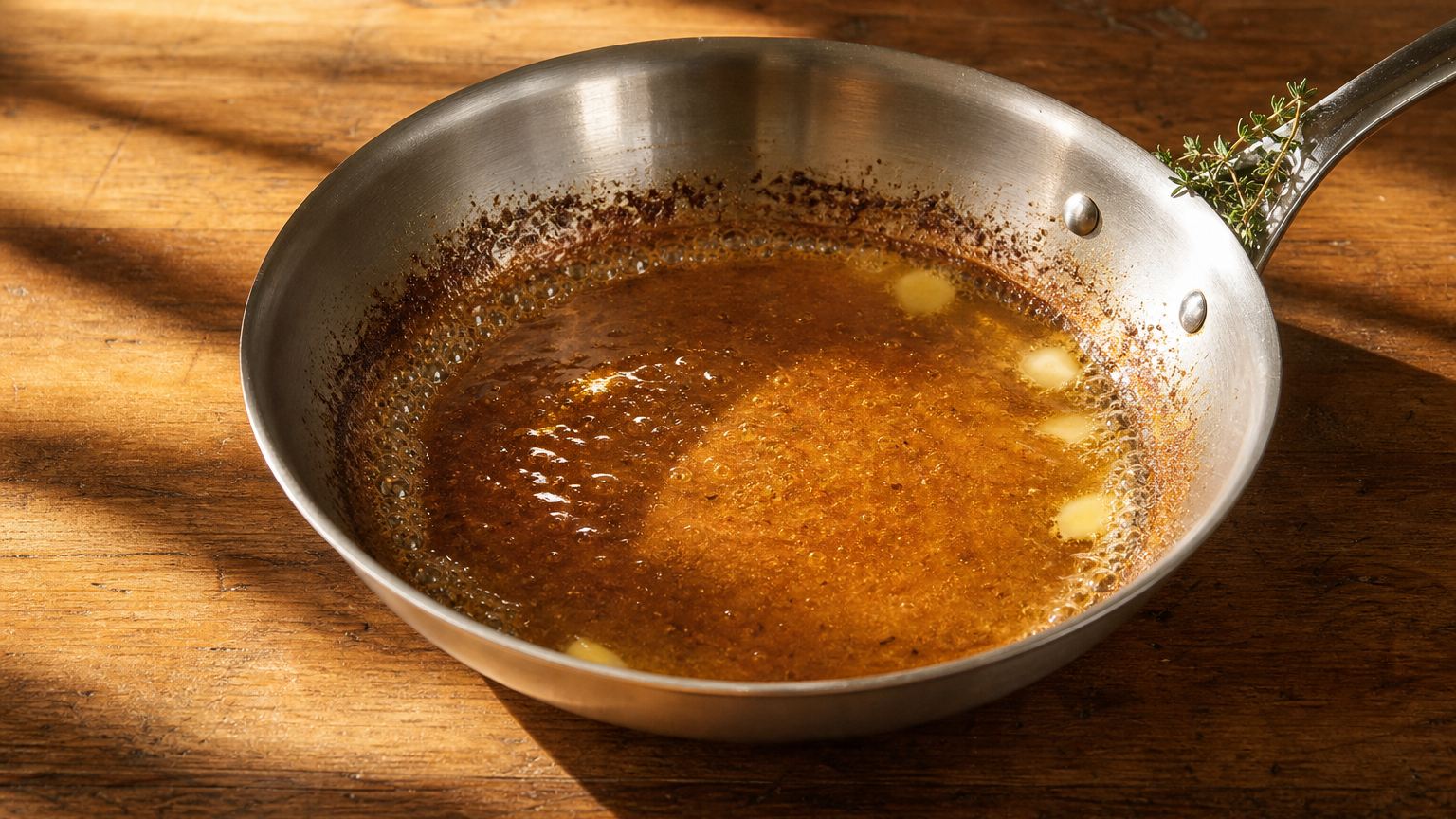
The straightforward version: deglaze with white wine, let it reduce by half, add chicken stock, reduce again to a few tablespoons, finish with cold butter. Works with chicken, pork, and veal. Total time: five minutes.
The cream and mustard version: deglaze with white wine or chicken stock, reduce, stir in two tablespoons of crème fraîche and a teaspoon of Dijon mustard, simmer until glossy. Slightly richer, good with pork and chicken. Works in the same pan you used for the One-Pan Creamy Garlic Chicken below, which does exactly this.
The brown butter and acid version: this one skips the deglazing step. After removing the protein, drop about 20 g of butter into the hot pan and let it foam and turn golden-brown. Once it smells nutty, take the pan off the heat before adding a squeeze of lemon, since the acid can spit in hot fat. Swirl and pour straight over the protein. Works well with fish, particularly salmon. This is a beurre noisette rather than a classic pan sauce, but it uses the same pan and the same heat.
For a deeper look at how salt affects searing and fond development, the how to salt food properly post covers the timing and the mechanism. The cooking oil guide is worth checking if you're not sure which oil to use at the high heat needed for a good sear.
What can go wrong
The fond burns before you deglaze: if the residue is dark brown and smells bitter, don't make a sauce from it. Discard it, wipe the pan, and start fresh with aromatics and stock. Burnt fond ruins the sauce.
Too much liquid: if you add a full cup of stock and reduce it for two minutes, you get a weak, watery liquid. Use 100-150 ml and reduce aggressively. The sauce should coat the back of a spoon.
Butter breaks: if you add cold butter to a sauce that is actively boiling, the emulsion breaks and the sauce splits into greasy pools and liquid. Take the pan off the heat, let it stop bubbling, then add the butter a piece at a time while swirling.
The pan gets cold between searing and sauce: residual heat is useful. Don't let the pan drop to room temperature before starting the sauce. You want medium to medium-low heat, not a cold pan you then have to heat up again.
Two recipes that use the technique
Both of these cook in a single pan and include a deglazing or saucing step. Gourmate's per-serving estimates for calories and protein are shown on each card.
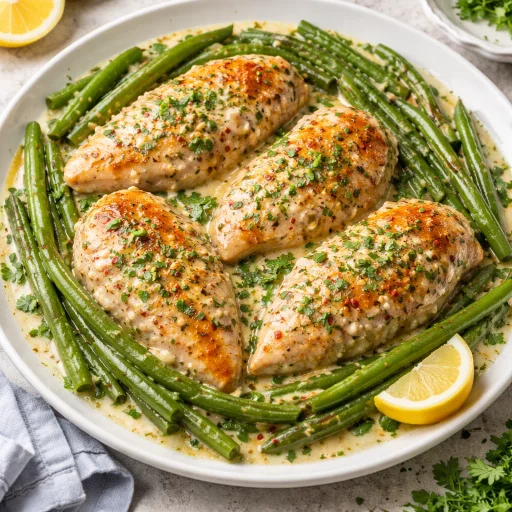
One-Pan Creamy Garlic Chicken with Green Beans
This One-Pan Creamy Garlic Chicken with Green Beans is a delightful dish that features juicy, seared chicken drizzled in a luscious garlic sauce paired with tender green beans. It's comforting and packed with flavor, perfect for a weeknight family dinner.
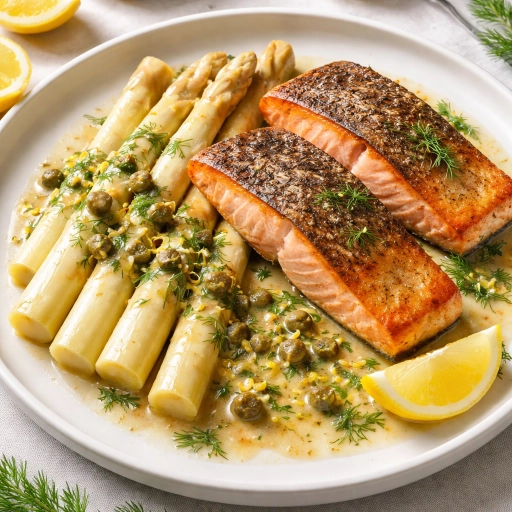
Lachs mit Spargel
This elegant plate pairs crisp-skinned salmon with tender white asparagus and a glossy browned butter sauce sharpened with lemon, dill, and capers. Rich yet fresh, it feels luxurious while staying clean, seasonal, and keto-friendly.
Making it a habit
The main barrier to making pan sauces regularly is treating them as a separate recipe rather than part of the cooking sequence. The sauce happens while the protein rests: sear, transfer to a clean plate, deglaze, reduce, done. A plate of seared chicken with a two-tablespoon pan sauce takes the same time as a plate of seared chicken without one.
Looking for weeknight recipes that use this technique without spelling out every step? Gourmate personalises suggestions around what you like to eat. See how the recipe discovery works.