
How Your Dinner Affects Your Sleep (And What to Eat)
The food and sleep connection is real and specific: how meal timing, caffeine, fiber, and dietary pattern affect the quality of your night's rest.
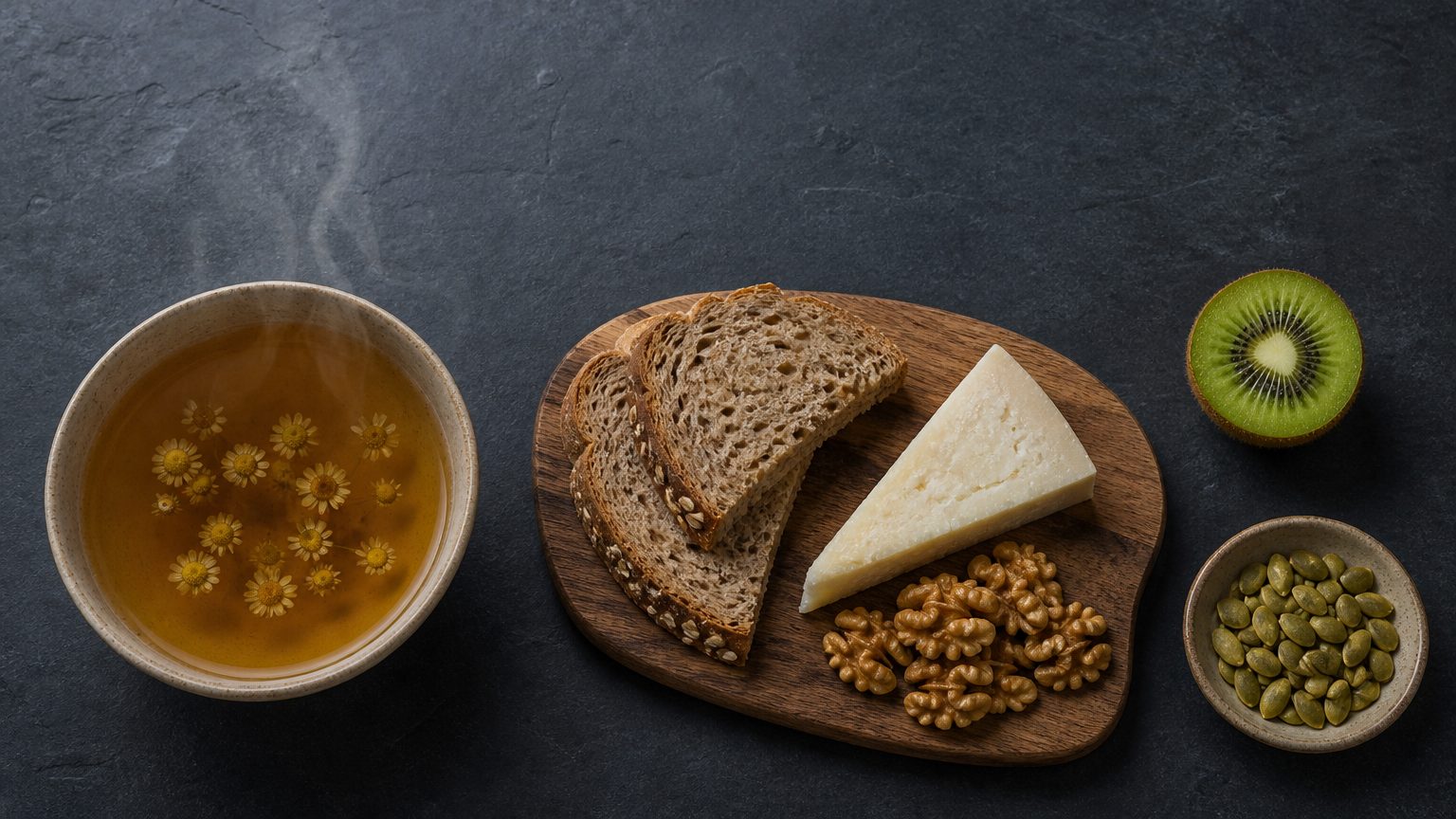
You did everything according to plan: dinner at seven, lights low by ten, in bed by eleven. Still, at 2 a.m. you're wide awake with an unsettled stomach. The conversation about poor sleep almost always goes to screens, stress, and room temperature. The meal eaten five hours earlier rarely comes up.
The food and sleep connection is real and specific, though more nuanced than the usual "don't eat too late" advice. Here's what the research actually shows.
Why dinner is different from other meals
Your core body temperature falls in the run-up to sleep and stays lower throughout the night. A large, heavy meal taken close to bedtime prolongs the digestive process and can interfere with that drop. There's also a more direct mechanical issue: lying down shortly after eating raises the risk of acid reflux, particularly for anyone prone to gastroesophageal reflux.
The CDC recommends avoiding large meals before bedtime as a standard sleep hygiene measure alongside limiting caffeine and alcohol. A practical rule most sleep hygiene programs use: aim to finish dinner at least two to three hours before you plan to sleep.
The caffeine timing problem
Caffeine works by occupying adenosine receptors in the brain. Adenosine builds up during waking hours and creates sleep pressure; caffeine blocks the signal rather than reducing the underlying accumulation. When caffeine clears, the built-up sleep pressure can feel like it arrives quickly.
The FDA notes wide individual variation in how fast caffeine is eliminated from the body, and recommends talking to a healthcare provider if you're sensitive to its effects. A 12-fluid-ounce serving of brewed coffee typically contains 113 to 247 mg; black tea about 71 mg; green tea about 37 mg. The CDC lists avoiding caffeine in the afternoon or evening as one of the standard evidence-based sleep hygiene measures.
The sources most people overlook: chocolate, some energy bars, and "decaf" coffee (which still contains 2 to 15 mg per cup). If you metabolize caffeine slowly and notice lighter sleep or more nighttime awakenings, moving your caffeine cutoff earlier is worth testing before any dietary change.
What research says about food and sleep quality
A 2016 paper in the Journal of Clinical Sleep Medicine by St-Onge and colleagues analyzed 26 adults who spent five nights in a sleep laboratory. In a secondary analysis using dietary recall from a self-selected eating day, three associations emerged between what participants ate and their polysomnography-measured sleep that night: higher fiber intake was associated with more time in slow-wave sleep (the deepest, most physically restorative stage); higher sugar intake was associated with more arousals; higher saturated fat was associated with less slow-wave sleep.
The findings come from one day of self-reported eating in 26 adults, which is a starting point rather than a robust basis for recommendations. They're consistent with what's observed in larger observational work but should be read as direction-setting, not prescriptive.
For more on how dietary fiber affects health broadly, the fiber guide covers the mechanisms in detail.
Foods that support a sleep-friendly dinner
No single ingredient reliably produces better sleep in isolation. The research points to overall dietary pattern rather than specific foods, but a few components are worth understanding.
Tryptophan is an amino acid the body uses to produce serotonin and, eventually, melatonin. Foods with relatively high tryptophan include turkey, eggs, pumpkin seeds, tofu, and dairy. The popular idea that a tryptophan-rich meal directly triggers sleepiness is an oversimplification: tryptophan competes with other amino acids for entry into the brain, and the actual effect on sleep in healthy adults eating ordinary mixed meals hasn't been reliably demonstrated in controlled trials.
Fiber-rich foods appear to support sleep architecture based on the crossover trial cited above. Everyday sources: lentils, chickpeas, oats, leafy greens, and most vegetables.
Magnesium plays a role in the regulation of melatonin and GABA, both of which are involved in sleep onset. The magnesium-rich foods guide covers sources in detail; everyday sources include pumpkin seeds, cashews, dark leafy greens, and legumes.
Fatty fish (salmon, mackerel, sardines) provides vitamin D and omega-3 fatty acids; some observational studies have found associations between higher omega-3 intake and self-reported sleep quality, though the mechanism and effect size aren't well established in controlled trials. It's a reasonable evening protein for other dietary reasons regardless.
Alcohol: the sedation trap
Alcohol reduces the time it takes to fall asleep. It also tends to disrupt sleep in the second half of the night: research on alcohol and sleep architecture consistently documents reduced REM sleep and more awakenings as blood alcohol falls. The CDC lists avoiding alcohol before bedtime as a standard sleep hygiene recommendation alongside avoiding large meals and caffeine.
Putting a dinner together
A dinner likely to support sleep rather than work against it generally:
- Finishes 2 to 3 hours before bed
- Includes a moderate amount of fiber from vegetables, legumes, or whole grains
- Contains moderate protein
- Keeps alcohol at none or minimal before sleep
A dinner of fish or legumes with vegetables and a small amount of whole grain covers the pattern: moderate fiber, moderate protein, low in added sugar and saturated fat. Two weeknight recipes in that direction:
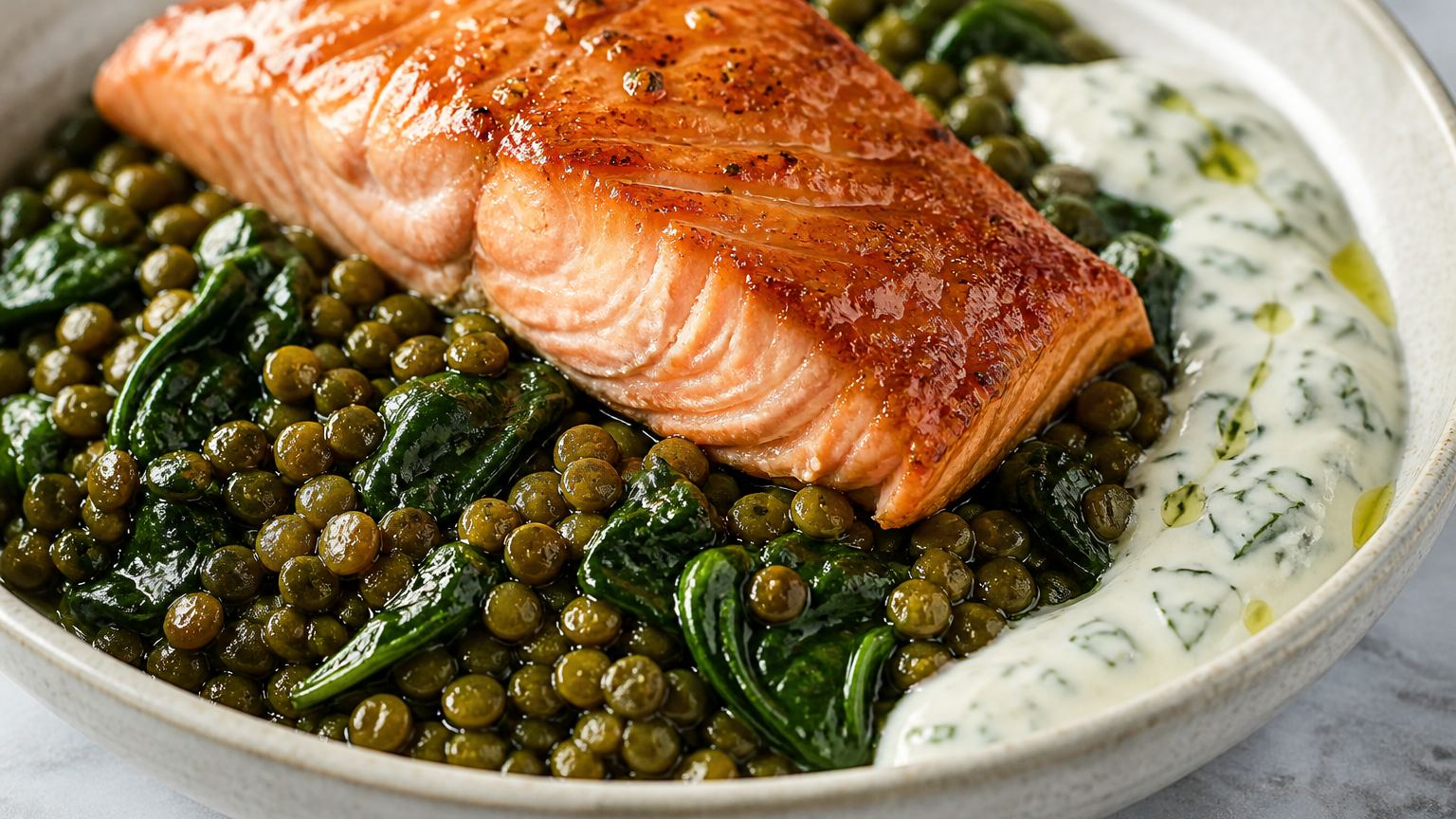

Baked Salmon with Warm Lentils, Spinach, and Lemon-Herb Yogurt
Tender baked salmon, cozy green lentils, and silky wilted spinach come together in a dinner that feels both comforting and bright. The lemon-herb yogurt adds a cool, tangy finish, and every element is simple enough for a weeknight while still looking beautiful on the plate.

Roti with Curry Vegetables
This quick Caribbean-style roti is filled with a warmly spiced curry of chickpeas and tender potato, wrapped in a soft pan-cooked flatbread. The result is comforting, fragrant, and satisfying, with a texture that is hearty enough for dinner yet simple enough for beginners.
When to talk to a doctor instead
Adjusting dinner timing and composition is useful for ordinary sleep optimization, not for treating sleep disorders. If you have persistent difficulty falling asleep, staying asleep, or waking unrefreshed despite enough time in bed, that's worth raising with your GP or a sleep medicine specialist. Loud snoring, choking or gasping during sleep, or excessive daytime sleepiness that interferes with daily functioning are symptoms that need clinical assessment rather than dietary adjustment.
Looking to build a week of lighter evening meals? Gourmate generates a full dinner plan from your preferences, with a shopping list ready to go.