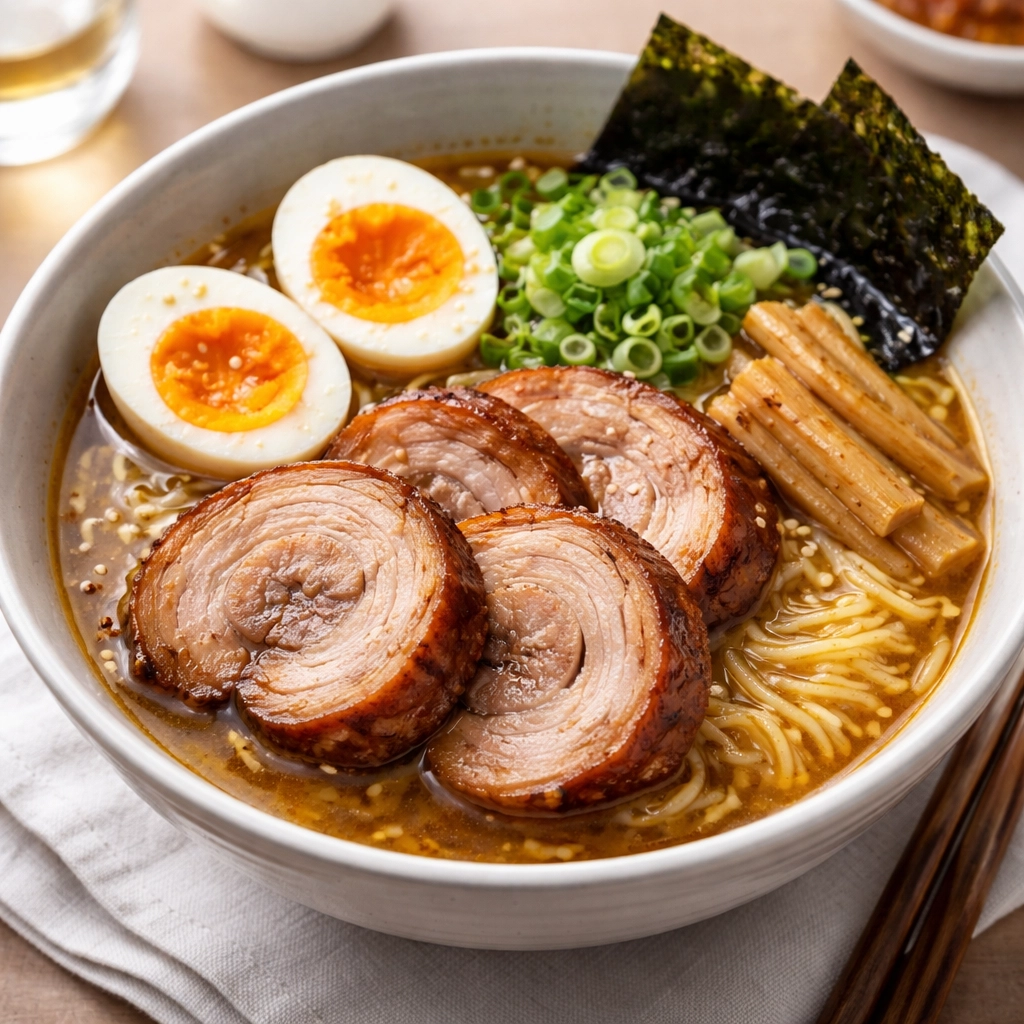
Miso Chashu Ramen
This ramen balances a deeply savoury miso broth with tender braised chashu pork belly, springy noodles, and soft jammy eggs. Nori, menma, sesame, and fresh spring onion add the classic layers of aroma, texture, and contrast that make a great bowl irresistible.
Nutrition · per serving
Ingredients
22 itemsChashu and braising liquid
Broth base
Eggs and noodles
Bowls and garnish
Tips
- •For a true 60-minute version, using a smaller rolled pork belly piece is key; a large traditional chashu roast would need much longer.
- •If you want deeper flavour, braise the pork a day ahead and chill it in its liquid; it will slice even more cleanly.
- •Fresh ramen noodles give the best texture, but dried alkaline ramen can be substituted; cook according to the packet and drain thoroughly.
- •If the broth tastes too intense after adding braising liquid, loosen it with a little hot water rather than more stock to keep the miso flavour focused.
Steps
- 1
Bring a small saucepan of water to a gentle boil for the eggs. At the same time, pat the pork belly dry so it sears rather than steams, and slice the ginger and crush the garlic for the chashu.
2 large eggs400 g pork belly, skinless, rolled and tied20 g fresh ginger, sliced3 garlic cloves, crushed - 2
Lower the eggs into the boiling water and cook for 6 1/2 minutes for jammy centres. Transfer immediately to cold water and let them cool while you start the pork.
2 large eggs - 3
Heat a heavy pot over medium-high heat with the neutral oil. Sear the pork belly on all sides until well browned, 6-8 minutes; strong colour here will deepen the final broth and chashu flavour.
400 g pork belly, skinless, rolled and tied10 ml neutral oil - 4
Add the water, soy sauce, mirin, sake, light brown sugar, sliced ginger, crushed garlic, and spring onion tops. Bring just to a boil, then reduce to a lively simmer, cover slightly ajar, and braise for about 35 minutes, turning once or twice, until the pork is tender enough to pierce easily with a skewer.
700 ml water80 ml soy sauce40 ml mirin40 ml sake20 g light brown sugar20 g fresh ginger, sliced3 garlic cloves, crushed2 spring onion tops400 g pork belly, skinless, rolled and tied - 5
While the pork braises, peel the cooled eggs carefully under water to avoid tearing. In a separate saucepan, combine the chicken stock, white miso, soy sauce, sliced ginger, and smashed garlic. Heat gently for 12-15 minutes without boiling hard; whisk the miso smooth so it stays rounded and not grainy.
2 large eggs900 ml chicken stock50 g white miso20 ml soy sauce10 g fresh ginger, sliced2 garlic cloves, smashed - 6
When the pork is done, lift it out and rest it for 5 minutes so the slices stay neat. Strain 150 ml of the braising liquid into the broth base for extra body and seasoning, then taste and adjust only if needed; miso and soy vary in saltiness.
400 g pork belly, skinless, rolled and tied900 ml chicken stock50 g white miso20 ml soy sauce - 7
Bring a pot of water to a rolling boil and cook the fresh ramen noodles until springy, usually 2-3 minutes. Stir early to prevent sticking, then drain well so the broth is not diluted.
260 g fresh ramen noodles - 8
Slice the rested pork belly into thick rounds. Halve the eggs. Warm the bamboo shoots briefly in a spoonful of hot broth if desired, and cut the nori sheets in half for easy serving.
400 g pork belly, skinless, rolled and tied2 large eggs80 g bamboo shoots (menma), drained2 nori sheets - 9
Divide the noodles between 2 deep bowls. Ladle over the hot miso broth, then top each bowl with sliced chashu, egg halves, bamboo shoots, spring onions, nori, a few drops of toasted sesame oil, and toasted sesame seeds. Serve immediately while the noodles are at their bouncy best.
260 g fresh ramen noodles400 g pork belly, skinless, rolled and tied2 large eggs80 g bamboo shoots (menma), drained2 spring onions, finely sliced2 nori sheets10 ml toasted sesame oil6 g toasted sesame seeds
Origin & History
Ramen developed in Japan from Chinese wheat noodle soups and evolved into many regional styles. Chashu, adapted from Chinese char siu, became a classic ramen topping, while miso ramen rose to prominence in Hokkaido in the 20th century for its rich, warming character. This bowl combines those established elements in a full-flavoured modern style.
Do even more with Gourmate
Cook this recipe in Gourmate — your AI meal planning app.
Plan Meals
Weekly planner at a tap
Ask Questions
Chat with your AI chef
Adjust Recipe
Scale servings & swap ingredients
Cook Mode
Step-by-step guidance
Kitchen Timers
Built-in timers & alerts
Grocery List
Auto-generated shopping lists