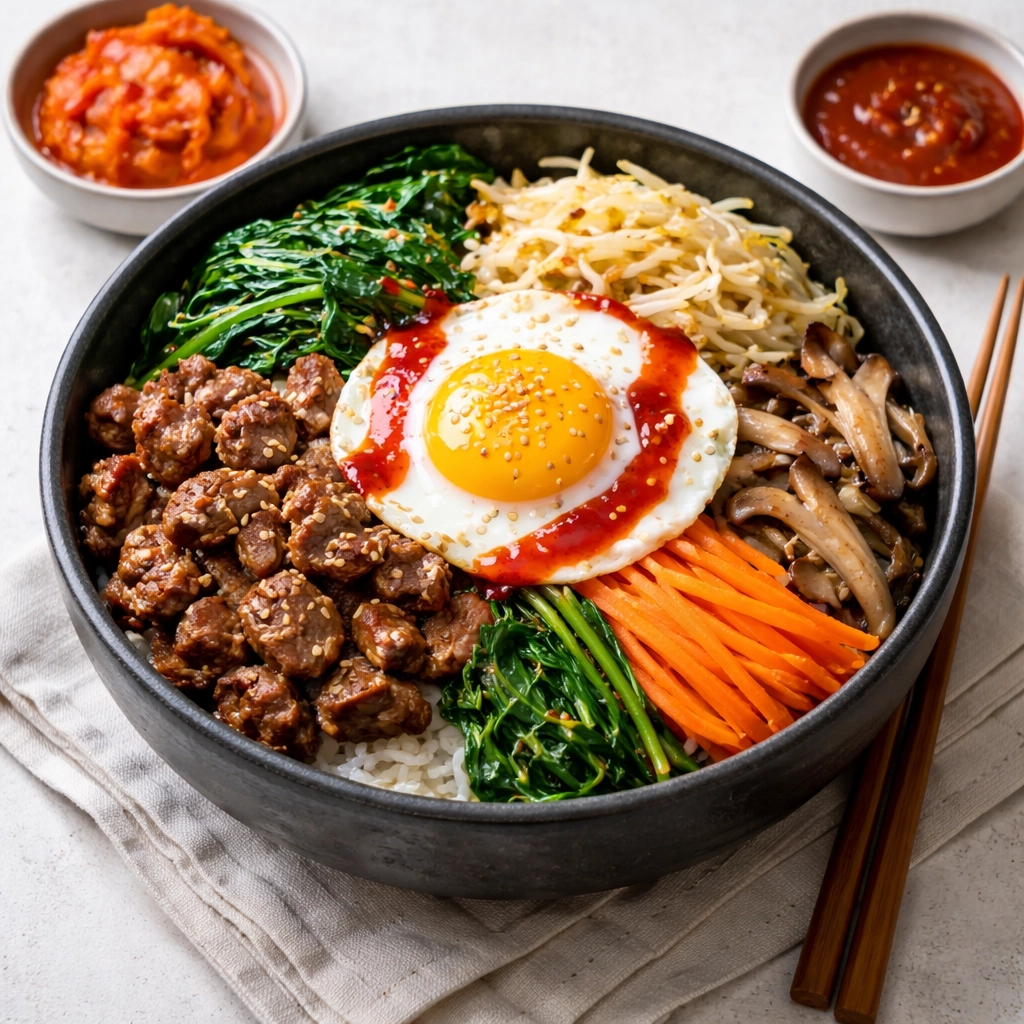
Bibimbap
This bibimbap balances warm rice, savory beef, silky egg yolk, and a colorful array of seasoned vegetables in one satisfying bowl. The gochujang sauce adds sweet heat, while sesame oil and seeds give the dish its signature nutty aroma.
Nutrition · per serving
Ingredients
25 itemsRice base
Seasoned beef
Vegetable namul
Gochujang sauce
Eggs and finish
Tips
- •To stay within 30 minutes, use pre-sliced beef and cook the rice first while preparing everything else.
- •Keep each topping separately seasoned and separate in the bowl; that contrast is part of a good bibimbap.
- •If you want a crisp rice crust, assemble the bowls in a very hot lightly oiled pan-safe stone or cast-iron bowl for 1 to 2 minutes before topping.
- •Mix the bowl thoroughly at the table so the yolk and gochujang coat the rice evenly.
Steps
- 1
Rinse the short-grain white rice 3 times until the water is mostly clear. Combine with water in a saucepan or rice cooker and start cooking immediately. If using a saucepan, bring to a boil, cover, reduce to the lowest heat, and cook for 12 minutes, then rest covered for 10 minutes off the heat.
180 g short-grain white rice240 ml water - 2
While the rice cooks, mix the beef sirloin with soy sauce, sesame oil, garlic, sugar, and black pepper. Toss well and let it stand while you prepare the vegetables; even a short marinade improves flavor.
120 g beef sirloin, thinly sliced10 ml soy sauce5 ml sesame oil5 g garlic, finely grated3 g sugar1 g black pepper - 3
Stir together the gochujang, sesame oil, soy sauce, sugar, and water until smooth and spoonable. Set aside for serving.
30 g gochujang5 ml sesame oil5 ml soy sauce5 g sugar15 ml water - 4
Bring a medium pot of water to a boil. Blanch the spinach for 20 to 30 seconds just until wilted, then lift out, squeeze gently to remove excess water, and season with a pinch of the fine salt, a little of the minced garlic, and a few drops of the sesame oil. In the same water, blanch the bean sprouts for 1 minute until crisp-tender, drain well, and season with a pinch of the fine salt, a little minced garlic, and a few drops of sesame oil. Keep the vegetables in separate piles.
120 g spinach120 g bean sprouts5 g garlic, minced15 ml sesame oil3 g fine salt - 5
Heat a frying pan over medium-high heat with a little of the neutral oil. Sauté the shiitake mushrooms with part of the minced garlic, a pinch of salt, and a small splash of soy sauce for 3 to 4 minutes until browned and dry-looking rather than watery. Remove and keep warm.
100 g shiitake mushrooms, sliced5 g garlic, minced3 g fine salt10 ml soy sauce10 ml neutral oil - 6
In the same pan, add a little more neutral oil if needed and sauté the carrot for 1 to 2 minutes with a pinch of salt, keeping it slightly crisp for contrast. Remove and keep separate.
80 g carrot, julienned3 g fine salt10 ml neutral oil - 7
Turn the heat to high and cook the marinated beef in the hot pan for 2 to 3 minutes, stirring, until just cooked and lightly caramelized at the edges. Do not overcrowd the pan; the beef should sear, not steam.
120 g beef sirloin, thinly sliced10 ml soy sauce5 ml sesame oil5 g garlic, finely grated3 g sugar1 g black pepper - 8
Fry the eggs sunny-side up in the remaining neutral oil over medium heat until the whites are set but the yolks are still runny, about 2 minutes. For neat eggs, cover the pan for the last 20 seconds to set the tops lightly without flipping.
2 large eggs10 ml neutral oil - 9
Fluff the rested rice and divide between 2 wide bowls. Arrange the spinach, bean sprouts, mushrooms, carrot, and beef in separate sections over the rice. Top each bowl with an egg, spoon over some gochujang sauce, and finish with toasted sesame seeds. Serve kimchi on the side.
180 g short-grain white rice120 g spinach120 g bean sprouts100 g shiitake mushrooms, sliced80 g carrot, julienned120 g beef sirloin, thinly sliced2 large eggs30 g gochujang5 ml sesame oil5 ml soy sauce5 g sugar15 ml water6 g toasted sesame seeds80 g kimchi
Origin & History
Bibimbap is one of Korea's most iconic rice dishes, built around the idea of combining rice with assorted seasoned vegetables, protein, and chili paste. It has long been associated with practical home cooking, festive table settings, and regional variation, with Jeonju especially famous for its version.
Do even more with Gourmate
Cook this recipe in Gourmate — your AI meal planning app.
Plan Meals
Weekly planner at a tap
Ask Questions
Chat with your AI chef
Adjust Recipe
Scale servings & swap ingredients
Cook Mode
Step-by-step guidance
Kitchen Timers
Built-in timers & alerts
Grocery List
Auto-generated shopping lists