
Beef Cuts Explained: What to Buy for What You're Cooking
A practical guide to the main beef cuts: what makes each different, which cooking methods suit it, and how to choose the right one at the supermarket.
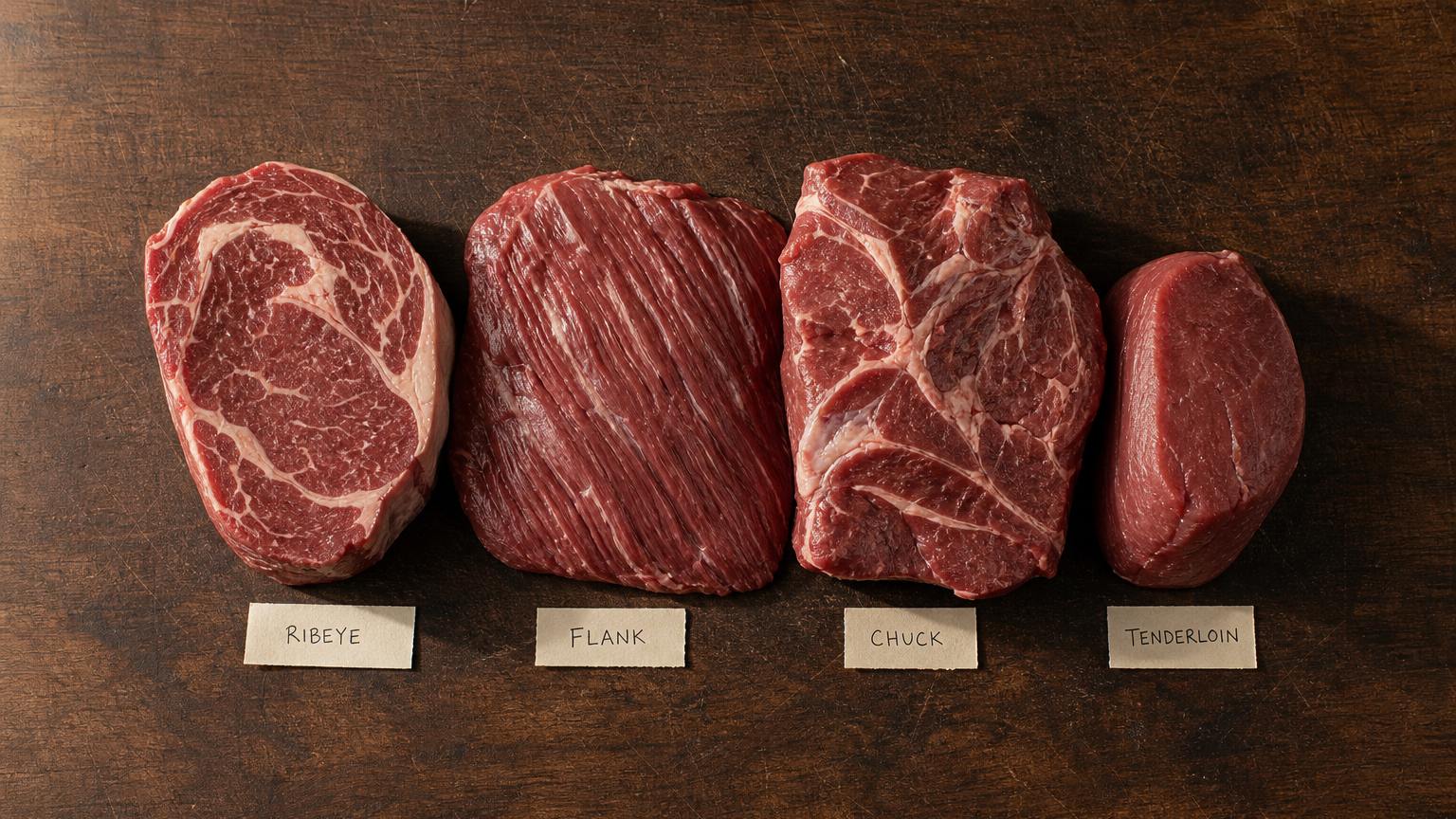
"What cut of beef do I need?" is one of the most common questions people have when following a recipe, and the answer changes the outcome significantly. Use the wrong cut and a braise stays tough; use the right one and it falls apart. The logic behind the cuts isn't complicated once you understand what you're actually buying.
Why cuts are different
Muscle use determines texture. Muscles that do a lot of work (the shoulder, the legs, the abdomen) are denser with connective tissue and tougher at first. They need long, slow, moist heat to break the collagen down into gelatin. Muscles that do little work (the back, the loin area) are tender already and need only quick, dry heat.
This is the fundamental principle that predicts how to cook any cut: the harder the muscle worked in life, the more slowly and gently you cook it.
The main cuts and where they come from
Chuck (shoulder): the front shoulder of the cow. Rich with connective tissue and fat marbling, cheap, and full of flavour when cooked slowly. Braises, stews, and pot roasts are its domain. 3-4 hours in a low oven or a pressure cooker turns the connective tissue to silky gelatin. Chuck is what makes a good beef stew taste like a good beef stew: don't substitute sirloin.
Brisket: the chest muscle. One of the toughest cuts, because the chest muscles work constantly just to support the animal's weight. The payoff for long, slow cooking is exceptional flavour and a distinctive moist texture. American barbecue tradition (Texas-style smoked brisket) and Jewish-American cuisine (braised brisket with onions) both understood this independently.
Rib: the mid-back. Less-worked muscles, well-marbled. Ribeye steak and prime rib are both from this area. The fat content makes it forgiving at high heat: it can take a sear on the grill or in a pan without drying out as quickly as leaner cuts. This is what to reach for when quality matters more than price.
Sirloin and strip (short loin and sirloin): from the back behind the ribs. The T-bone, porterhouse, and New York strip come from the short loin; the top sirloin sits just behind it. Leaner than the rib section, still tender. Good for fast, dry-heat cooking (grill or pan). The lower fat content means they dry out faster than rib cuts when cooked to medium-well or beyond.
Tenderloin (fillet): the muscle that runs along the inside of the spine, rarely used. The most tender cut in the whole animal, and the most expensive. Needs very little cooking time because there's nothing to break down; the risk is overcooking it. A roast or individual steaks cooked quickly to medium-rare to medium is the standard approach.
Flank and skirt: flat cuts from the abdominal area. Strongly grained muscle, lean, tough if cooked past medium. The correct technique: marinate to add flavour and tenderise, cook fast (grill or pan) to medium-rare or medium, then slice thinly across the grain. This is how carne asada works; it's also what flat-iron steak, bavette, and hanger steak rely on.
Round (rear leg): the large muscle group from the back legs. Lean and tough. Budget-friendly, and suited to low-and-slow methods (braising, slow cooker, roasting at low temperature), or sliced very thin for dishes where brief cooking over high heat is balanced by thin slices (beef stir-fry, for example).
How this translates to supermarket shopping
Most supermarket packaging names the cooking method as well as the cut, and the two should agree:
- If a packet says "for slow cooking" or "for braising", it's chuck, brisket, short rib, or similar.
- If it says "for grilling" or "for steak", it's from the loin or rib area.
- If it says "stir-fry strips", it's likely round or flank, sliced thin and meant for quick cooking.
When a recipe calls for "braising beef" without specifying the cut, chuck is almost always the correct choice. For "stew meat", the same applies.
Ground beef is typically made from chuck or round or a blend. The fat percentage on the label matters for cooking: 80/20 (20% fat) behaves differently from 93/7 (7% fat). The higher-fat version makes better burgers and meatballs; the leaner version is better for sauces where you'd drain the fat anyway.
Safe cooking temperatures
The safe minimum internal temperature for whole-muscle beef is 63°C/145°F with a three-minute rest, per USDA guidance. For ground beef (burgers, meatballs), it's 71°C/160°F, because grinding distributes any surface bacteria throughout.
Note that mechanically tenderised, blade-tenderised, or needle-injected beef (look for this on the label) should not be treated like a simple intact steak at the surface. For these products and for ground beef, colour alone is not a safe guide: beef can lose its red/pink colour before reaching a safe temperature.
For slow-braised and stewed beef, the long cooking time combined with sustained heat means food-safety temperatures are reached well before the meat is tender. Collagen breakdown that makes braised meat silky begins around 70°C and requires extended time, so a finished, tender braise is also a safe one.
Planning meals around different proteins each week? Gourmate generates varied dinner plans built around your preferences. Find out how the recipe discovery works.