Pancakes and French Toast: the Two Breakfast Classics
How to make fluffy buttermilk pancakes and crispy French toast at home: the custard ratios, the temperatures, and the timing that makes both work first time.
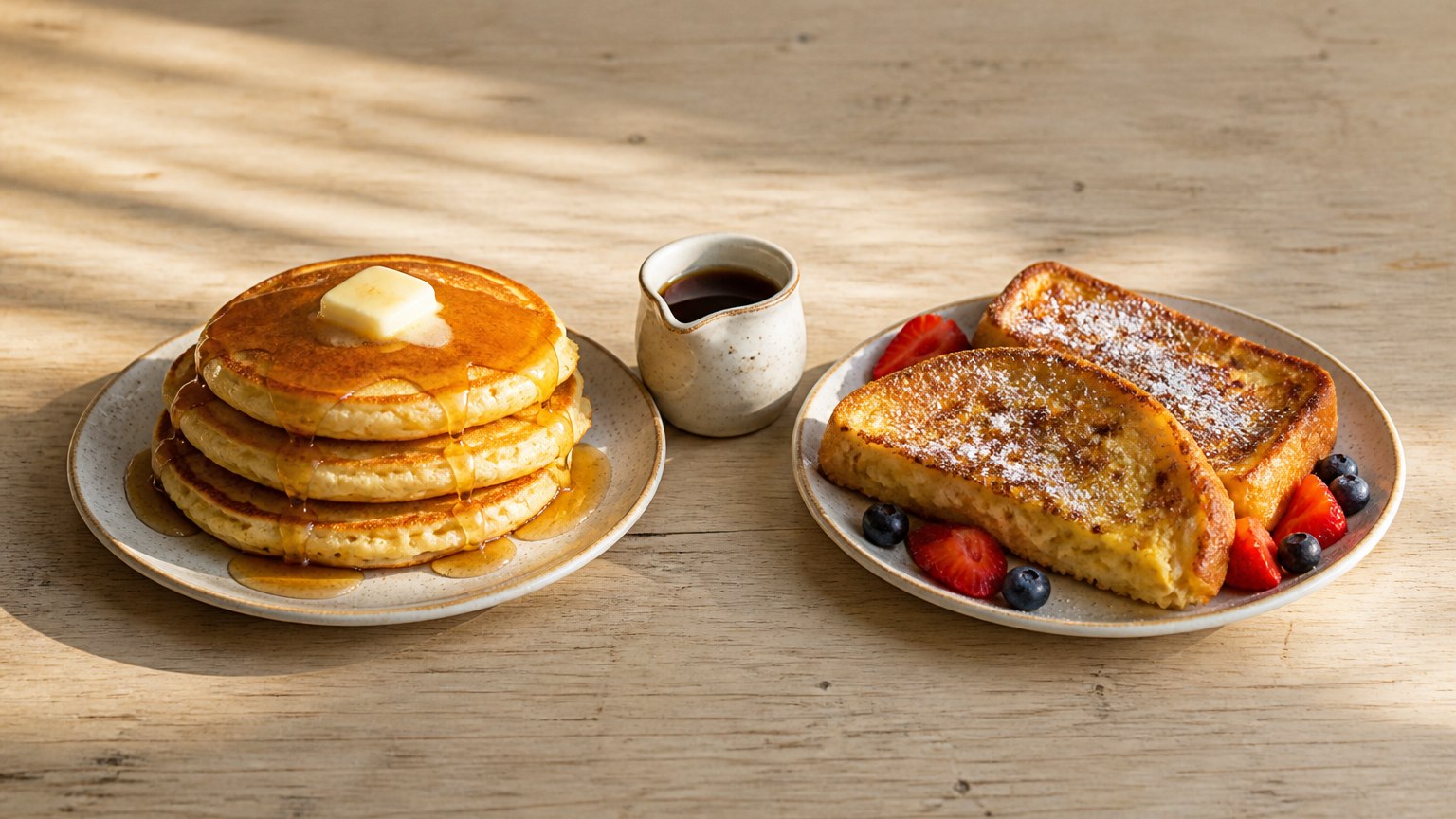
Pancakes and French toast are both egg-and-milk batters cooked in a hot pan, and both are regularly made badly for the same reason: too much heat. The outside browns or burns before the centre is set, or the batter sticks because the pan wasn't ready. Getting both right comes down to temperature control and the right ratio of liquid to starch.
Both are genuinely quick: the pancake batter takes about 5 minutes to mix, and each batch cooks in 3-4 minutes per side. French toast is faster still if the bread is ready to soak. A full breakfast for two of either dish is on the table in under 30 minutes.
Pancakes: the batter
Buttermilk pancakes have a fluffier, more tender crumb than standard milk pancakes. The acid in buttermilk reacts with baking soda (or baking powder) to produce carbon dioxide bubbles that create lift. The result is a more open crumb.
Two rules that make or break the texture:
Don't overmix. Once the wet and dry ingredients meet, stir only until no dry streaks remain. A few small lumps are fine and actually better than a smooth batter: over-stirring develops gluten, which makes the pancakes tough. The batter should look a little rough.
Don't press down after flipping. Pressing squeezes out the gas bubbles that are lifting the pancake. Flip when bubbles appear across the surface and the edges look set; don't rush the flip, and don't touch them after.
Cook at medium heat on a well-buttered pan. If the edges look cooked before bubbles appear, the pan is too hot. The first pancake is often a test; adjust the heat before the second batch.
If you don't have buttermilk: stir 1 tablespoon of lemon juice or white vinegar into 250 ml of whole milk and leave it for 5 minutes before using. The milk will slightly curdle and thicken, which is the desired acidic effect. Full-fat plant milks (oat, soy) also work with the same acid addition.
French toast: the custard
French toast is essentially bread soaked in a custard (eggs, milk, sugar, vanilla, cinnamon) and pan-fried. The quality depends on two things: the bread and the soak.
Thick-cut, slightly stale bread is better. Fresh bread can get too wet and fall apart in the pan. A day-old loaf or brioche has less moisture and absorbs the custard more evenly without disintegrating. If you only have fresh bread, leave the slices out for 30 minutes before soaking.
Let the bread soak properly. The bread should sit in the custard for 15-20 seconds per side for thick slices, pressing it gently so the custard reaches the centre. Underdone soaking produces dry centres; overdone soaking produces soggy ones.
Cook at medium to medium-low heat. French toast needs enough time for the custard inside to set without the outside burning. If it's browning too fast, reduce the heat.
For a richer result: replace half the milk with single cream. For a more savoury variation: omit the sugar and cinnamon, add a pinch of salt and grated Gruyère, and serve with a fried egg.
Leftover French toast keeps in the fridge for a day and reheats well in a dry pan for 1-2 minutes per side. It gets slightly firmer when cold. Do not reheat in the microwave; it makes the bread soggy.
Allergens and food safety
Both recipes contain gluten (wheat), dairy, and egg. If using plant milk as a buttermilk substitute: oat milk can introduce oat allergens; soy milk introduces soy; nut-based milks introduce tree nuts. Check the label of any plant milk you use. Packaged bread and brioche for the French toast may contain soy, sesame, or nuts; check the label.
The buttermilk pancakes can be made dairy-free using plant milk with an acid addition and a neutral oil. Gluten-free flour blends designed for pancakes work in the buttermilk recipe with slightly different texture.
Raw eggs carry a Salmonella risk. Raw flour also carries microbial risks. Do not taste either batter before cooking. Cook pancakes until bubbles appear across the surface and the edges are set before flipping; cook through until no wet batter remains. Cook French toast until the custard is fully set at the centre (the slice should feel firm, not liquid, when pressed). Reheat leftovers until piping hot throughout. Anyone who is pregnant, over 65, under 5, or immunocompromised should be especially careful about fully cooked eggs.
Both recipes together
Buttermilk Pancakes
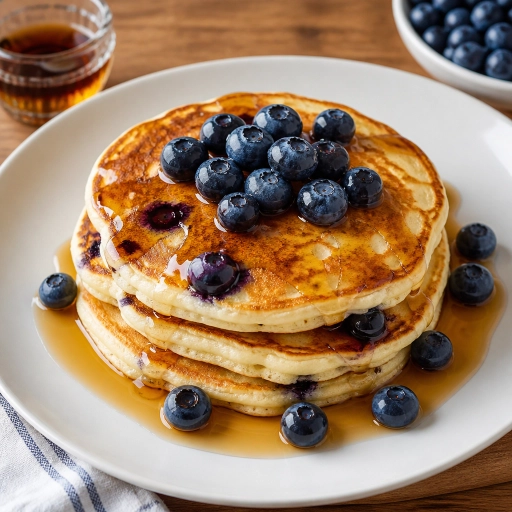
These buttermilk pancakes are thick, tender, and fluffy, with lightly crisp golden edges and a soft, airy centre. Finished with sweet maple syrup and bursts of juicy blueberries, they make a simple but satisfying breakfast for two.
French Toast
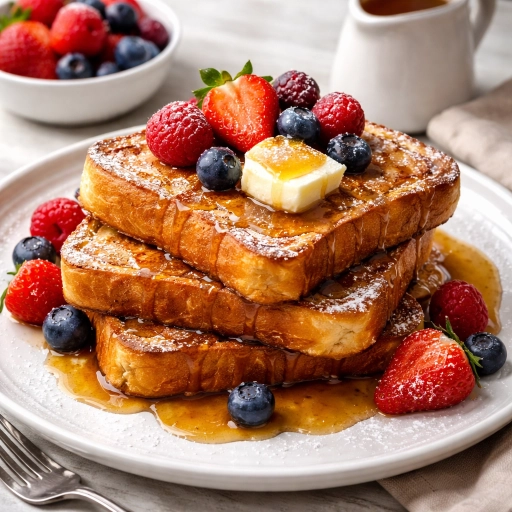
Golden, crisp-edged slices with a creamy, custardy interior flavored with vanilla and cinnamon. Served warm with maple syrup and bright fresh berries for a balanced sweet breakfast.
Gourmate's per-serving estimates are on each card. Both are substantial breakfasts.
More breakfast ideas for the week? Gourmate builds personalised meal plans including breakfast options. Find out how the recipe discovery works.