
Classic Beef Chili: the Recipe That Gets Better on Day Two
A proper beef and bean chili: ground beef, kidney beans, crushed tomatoes, and a spice blend that deepens overnight. How to make it and why leftovers beat the first bowl.
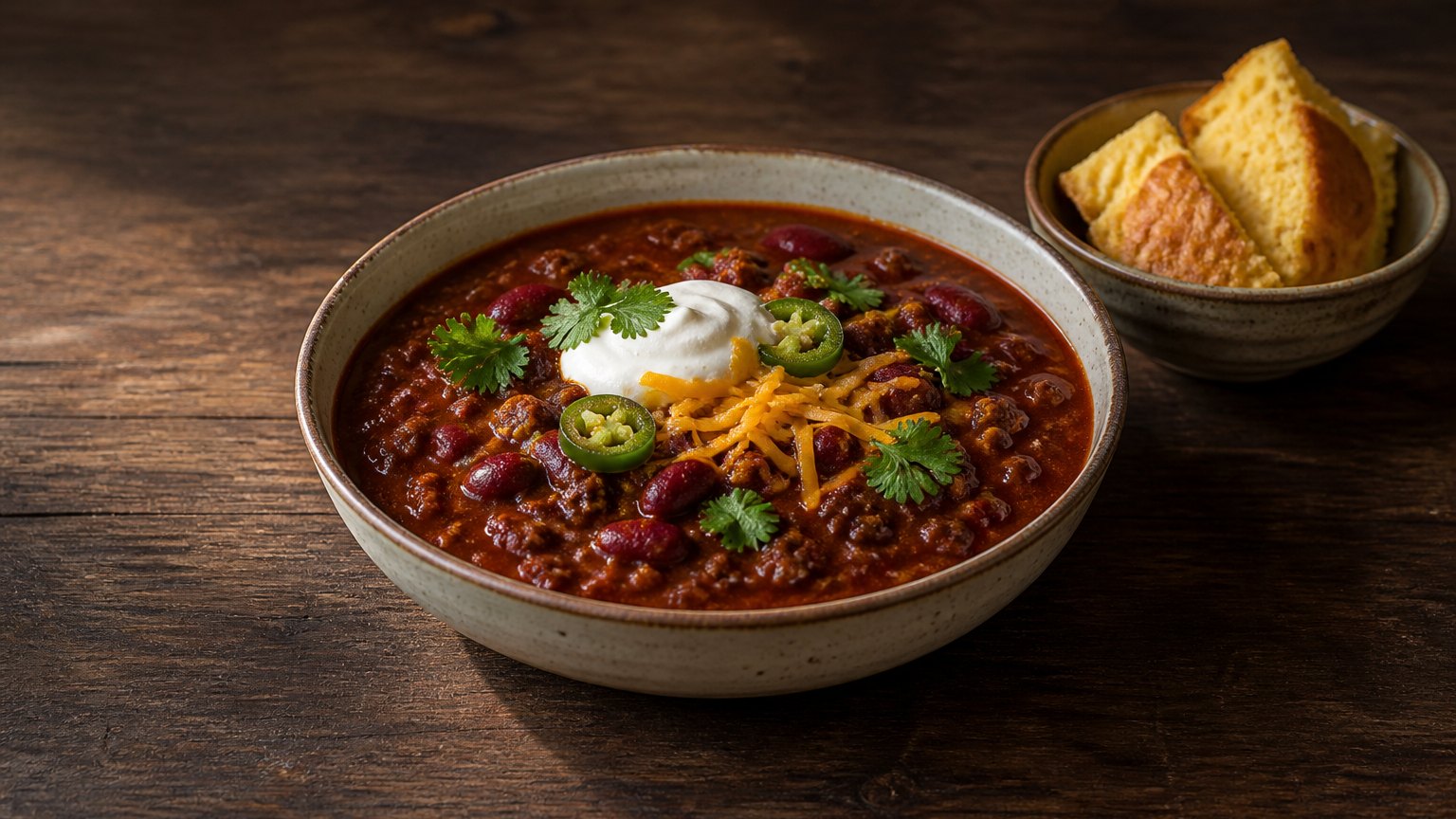
Chili is one of the few dishes that genuinely improves on the second day. The spices have more time to hydrate, the beans absorb flavour from the sauce, and the fat emulsifies more completely overnight. If you can make it a day ahead, do.
This is the classic American version: ground beef, kidney beans, crushed tomatoes, and a spice base of chili powder, cumin, and smoked paprika. It feeds four, and it freezes well.
Why this combination works
Chili's flavour comes from the interaction of three layers:
The fat base: browning the ground beef properly creates fond and Maillard compounds that form the backbone of the sauce. Don't rush this step and don't add too much liquid too early; let the beef actually brown rather than steam.
The spice bloom: chili powder, cumin, and smoked paprika added to the fat briefly before the liquid goes in intensifies their flavour. Thirty seconds in the hot fat transforms raw-smelling spice into something rounder and deeper. This step costs nothing in time but makes a significant difference.
The long simmer: the liquid reduces, concentrating the flavour; the beans absorb the sauce; and the tomato acid mellows as it cooks. A 30-40 minute simmer is the minimum; longer is better.
The beef
Ground beef with around 20% fat content makes a better chili than lean mince. The fat renders into the sauce and carries the spice flavours. Very lean beef tends to produce a thinner, blander result.
Brown the beef in batches if you have a lot. Crowding the pan steams the meat instead of browning it, and brown beef contributes far more flavour than grey steamed beef. Medium-high heat, minimal stirring until each batch has coloured on the bottom.
The beans
Canned kidney beans are fine and practical. Drain and rinse them before adding; this removes the starchy liquid from the can, which can make the chili gluey. Add the beans in the last 15-20 minutes of cooking: adding them too early makes them mushy.
The recipe
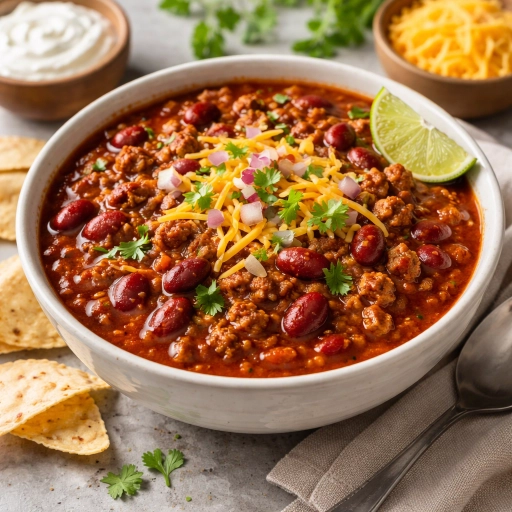
Beef and Bean Chili
A robust, tomato-forward chili with browned ground beef and tender kidney beans, seasoned with chili powder, cumin and smoked paprika. Simmered until thick and comforting, it makes an easy, satisfying weeknight main.
Gourmate estimates 460 calories and 36 g protein per serving for four.
Background
Chili con carne is contested territory. Texas purists insist it should contain no beans and no tomatoes, only beef and dried chilies. Most home cooks in the rest of the world have moved on. This version follows the more common American comfort-food version: beans in, tomatoes in, and a spice blend that most kitchens can replicate without hunting down dried ancho chilies. It's genuinely good and genuinely quick for a slow-cooked-tasting dish: 45 minutes from chopping the onion to serving.
A few things that work well alongside:
- Sour cream or thick yogurt: the cool dairy balances the heat
- Shredded cheddar: melts into the hot chili
- Pickled jalapeños: adds sharpness alongside heat
- Cornbread or crusty bread: for scooping
Variations and serving
For a vegetarian version: replace the beef with one 400 g can of black beans and one 400 g can of chickpeas, and use vegetable stock instead of any beef-based liquid. Increase the cooking time by 10-15 minutes and add a tablespoon of tomato paste for more depth. The spice ratios stay the same.
For more heat: add chipotle paste, fresh jalapeños with the onion, or cayenne pepper alongside the chili powder. Start conservatively; heat is easier to add than remove. Taste and adjust seasoning: it often needs a pinch more salt after sitting.
Chili freezes well for up to 3 months. Let it cool to below 60°C before transferring, then portion into shallow containers and refrigerate or freeze promptly. Don't leave a large pot at room temperature for more than two hours. Reheat from frozen to at least 74°C throughout.
Allergens and food safety
This chili as written contains no major regulated allergens (no dairy, gluten, nuts, or egg). Check your canned tomatoes and chili powder: some brands of both include additional ingredients that may introduce soy or other allergens. Worcestershire sauce, if you use it as an optional addition, typically contains fish (anchovies).
Raw ground beef: keep raw beef away from any ingredient that won't be cooked. Wash hands, the board, and any utensil that touched the raw meat before handling anything else. Cook the beef to at least 71°C/160°F internal temperature; ground beef must be cooked fully through, because grinding distributes surface bacteria throughout. Do not use colour as a guide: beef can appear brown before it reaches a safe temperature. A thermometer is the reliable check.
Looking for more comfort food recipes for the week? Gourmate personalises weekly meal suggestions around your tastes. Find out how the recipe discovery works.