
How to Do Your Grocery Shopping from a Meal Plan
How planning meals before grocery shopping changes what ends up in your fridge: cut waste, reduce unplanned purchases, and make one trip count.
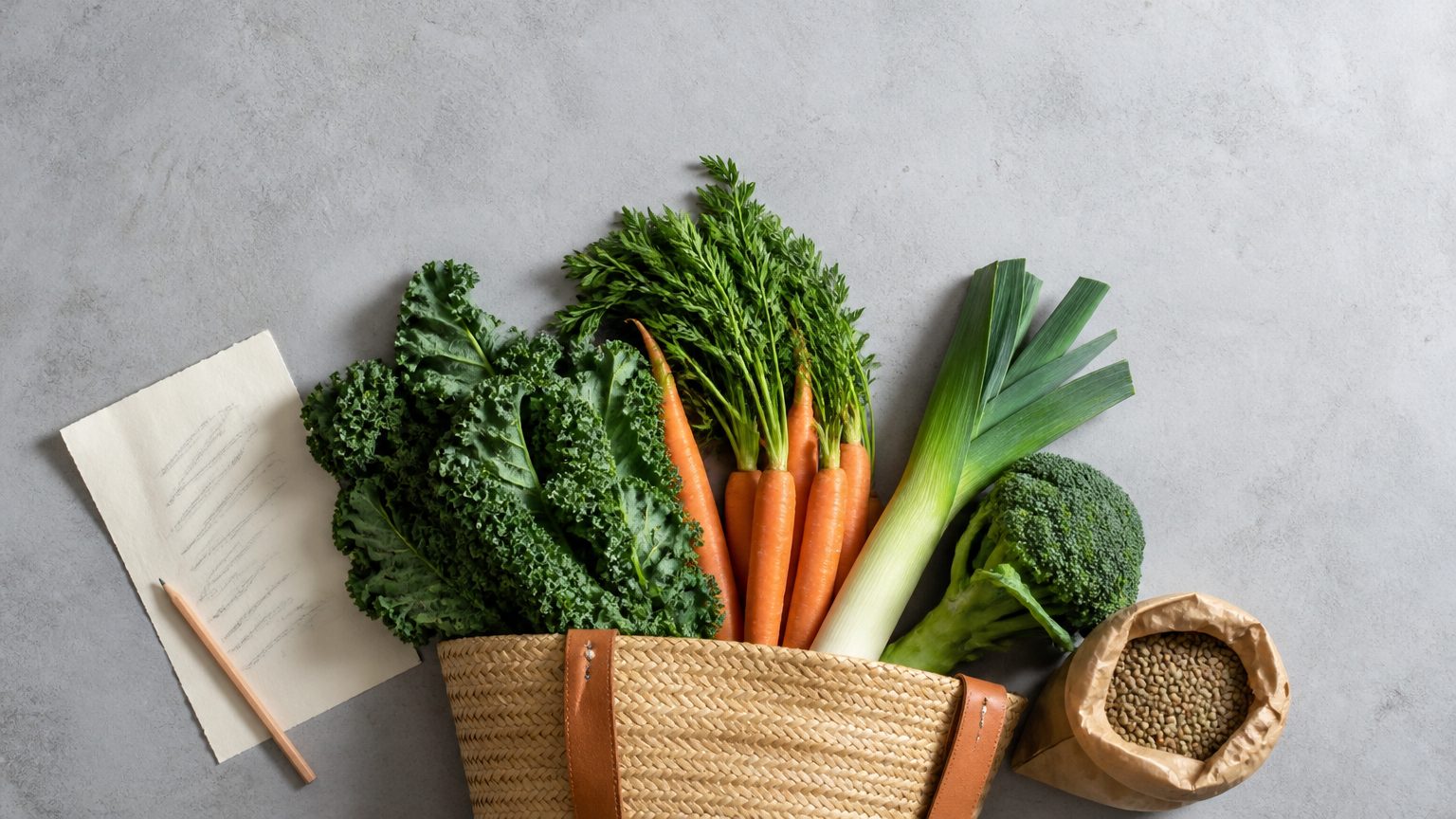
Tuesday, 6pm: half a bunch of coriander is going slimy in the fridge because the recipe called for one tablespoon and you bought the whole bunch. There's a leek that was meant for something but you can't remember what. The avocados you bought on impulse went from rock-hard to overripe while you were figuring out when to use them.
This isn't unusual. Most grocery shopping is done loosely: picking up things that might work, accumulating more than you need, and ending the week with half a fridge of ingredients that don't quite go together. The fix isn't budgeting tips or shopping apps. It's the order of operations: plan the meals first, then write the list from the plan.
Why planning meals before grocery shopping works
A meal plan is a specific list of dishes. A grocery shopping list built from that plan is a specific list of ingredients for those dishes. Every item has a job: it's needed for a specific meal on a specific day.
That eliminates the "might be useful" category, which is where most waste and unnecessary spending comes from. The leeks bought because leeks are generally useful, that might go into something, stop getting bought when the plan comes first. Instead, you buy the one leek the soup on Wednesday actually needs.
Research from ReFED identifies consumer meal planning as among the highest-impact household behaviors for reducing food waste. The individual effect depends on how consistently you follow through, but the mechanism is straightforward: a plan makes it easier to buy less and use more.
Building a grocery shopping list from your plan
The list you write from a plan is different from a list you compile from memory. It's organized by what you're cooking, which means it naturally groups and de-duplicates. Three different meals that use onions show up as one entry rather than three.
The most useful thing to do with that list before leaving is sort it by store section: produce, dry goods, refrigerated, frozen. Walking through the store in that order eliminates the back-and-forth that costs both time and impulse control. Fewer unplanned items end up in the cart when you have a clear path.
Two small habits make the list sharper. First, compare unit prices on shelf labels (price per kilogram or per 100g) rather than pack prices. A larger pack is only cheaper if it all gets used. Second, buy loose produce in the quantity the recipes actually need rather than the pre-bagged amount the store prefers, especially for fast-spoiling herbs and salad leaves.
The perishable vs. pantry distinction
Not all grocery shopping works the same way. Fresh produce and proteins spoil; you're buying them for specific meals on specific days. Dry pasta, tinned legumes, grains, and oils are shelf-stable; buying a little extra doesn't create the same problem.
Before shopping, go through the list and separate what's perishable from what isn't. For the perishable items, buy what the plan specifies. For pantry items, buying more than one week's worth is usually fine.
The rule that follows from this: if a perishable item isn't assigned to a specific meal in the plan, leave it. "I'll probably use this at some point" is how the coriander ends up in the compost.
Staying on track through the week
A well-built weekly plan makes one main shop per week realistic for most households. Sometimes it doesn't fully hold. Something runs out early, a meal gets swapped, or a recipe needed three eggs and you only had two. Those situations call for a short, specific top-up trip: one or two items. The key is keeping it narrow. Once you're in a supermarket without a clear reason to be there, unplanned items accumulate.
If you consistently do substantial top-ups every week, check whether the plan is realistic. Some meals may require ingredients that spoil before they're used. A few swaps, or having one more flexible night (pasta from the pantry, eggs and toast), can make the plan more durable without requiring a larger initial shop. The batch cooking guide covers how to build in that kind of flexibility across the week.
Organising the list and using the Gourmate shopping feature
Stores are divided by category. A shopping list organised to match the store layout is faster to work through than one that sends you across the floor multiple times.
Once you've added your week's meals to Gourmate and confirmed serving sizes, the app groups the ingredients into a categorised shopping list. You select which items to add from each recipe, and it merges everything into one organised list. That step takes a few minutes, but the actual in-store trip becomes straightforward: one section at a time, one pass through the list.
For most households, the plan-to-list-to-store workflow is faster and produces less waste than shopping from habit or a rough idea. The main thing it requires is actually writing the plan first.
Want the list to come from the plan rather than the other way around? Gourmate builds a categorised shopping list from your week's meals.