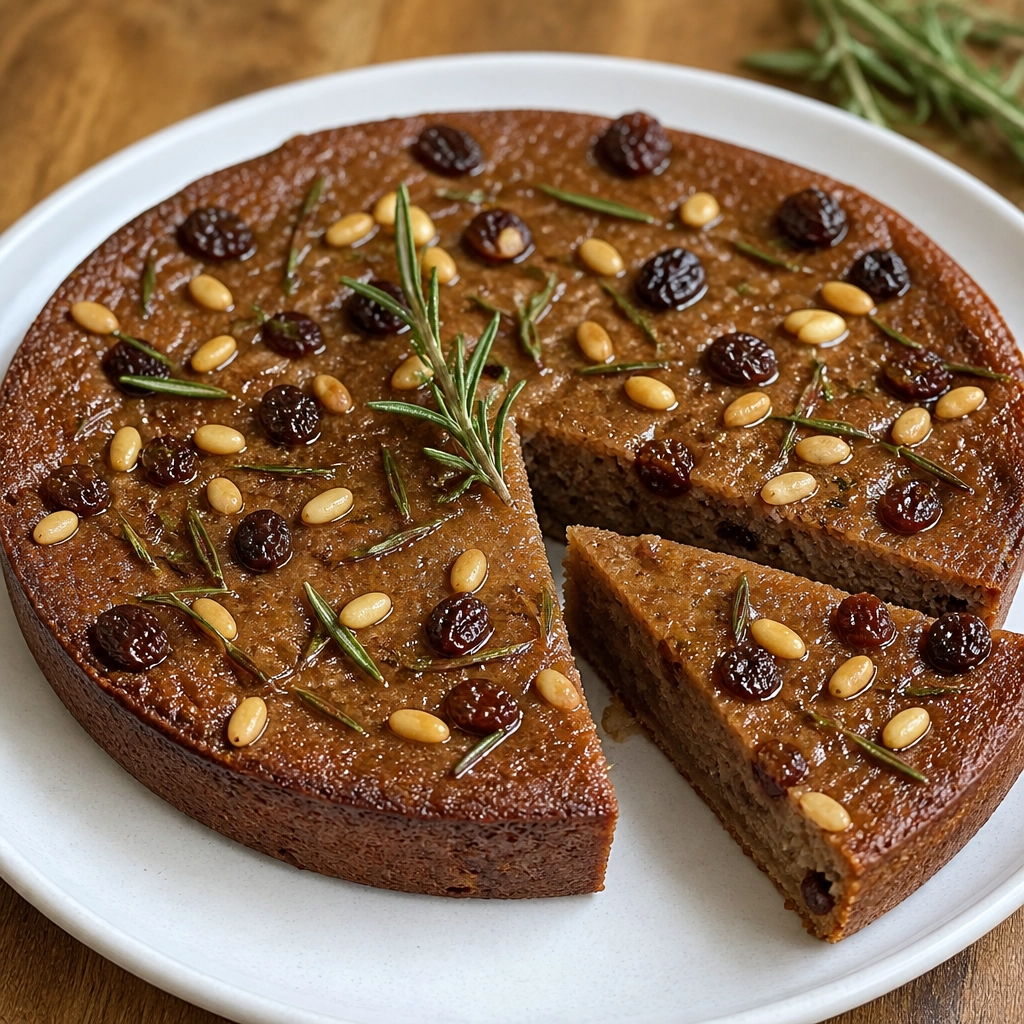
Castagnaccio
Castagnaccio is a thin, rustic Tuscan cake with a dense, tender crumb and the deep, earthy sweetness of chestnut flour. Studded with raisins, pine nuts, and fragrant rosemary, it is simple, distinctive, and wonderfully old-world in character.
Nutrition · per serving
Ingredients
9 itemsChestnut batter
Traditional topping
Tips
- •For the most authentic texture, do not add sugar; traditional Castagnaccio relies on the natural sweetness of chestnut flour and raisins.
- •If your chestnut flour tastes slightly bitter, it may be old; fresh chestnut flour should taste sweet, nutty, and earthy.
- •A dark metal tin gives better edge color than glass or ceramic.
- •This cake pairs well with a small glass of Vin Santo, espresso, or unsweetened tea.
Steps
- 1
Preheat the oven to 200°C. Lightly oil a 20 cm round baking tin or small skillet. Soak the raisins in the warm water for 10 minutes so they plump and do not scorch during baking. Strip the rosemary leaves from the stems and roughly chop half of them, leaving the rest whole for a more rustic finish.
25 g raisins40 ml warm water3 g fresh rosemary5 ml extra-virgin olive oil - 2
Sift the chestnut flour into a bowl to break up any lumps; chestnut flour clumps easily and sifting helps give Castagnaccio its characteristic smooth, dense texture rather than a gritty one. Add the fine salt.
140 g chestnut flour2 g fine salt - 3
Pour in the water little by little, whisking constantly until you have a smooth, pourable batter with no dry pockets. Whisk in the extra-virgin olive oil. The batter should be looser than pancake batter and settle quickly when the bowl is tapped.
190 ml water15 ml extra-virgin olive oil - 4
Drain the raisins well and stir half of them into the batter along with half of the pine nuts and the chopped rosemary. Mixing some garnish into the batter distributes flavor through the cake while keeping the top attractive.
25 g raisins20 g pine nuts3 g fresh rosemary - 5
Pour the batter into the prepared tin and level it gently. Castagnaccio should bake as a thin cake, about 1.5 cm deep, not a tall one. Scatter the remaining raisins, remaining pine nuts, and the rest of the rosemary over the surface, then drizzle with the remaining olive oil.
25 g raisins20 g pine nuts3 g fresh rosemary5 ml extra-virgin olive oil - 6
Bake for 25 minutes, or until the surface is set, lightly crackled, and matte rather than wet. The edges may darken slightly, which is traditional, but the cake should not be hard. A skewer inserted in the center should come out mostly clean, with just a little moist crumb.
- 7
Let the Castagnaccio rest in the tin for 5 minutes to firm up, then slice and serve warm or at room temperature. It is traditionally served plain, as its chestnut flavor is naturally sweet and earthy.
Origin & History
Castagnaccio is a rustic Tuscan chestnut flour cake associated with the rural areas of Tuscany and the Apennines, where chestnuts were once a staple food. It is one of the classic examples of cucina povera, turning a few simple pantry ingredients into a deeply traditional seasonal bake.
Do even more with Gourmate
Cook this recipe in Gourmate — your AI meal planning app.
Plan Meals
Weekly planner at a tap
Ask Questions
Chat with your AI chef
Adjust Recipe
Scale servings & swap ingredients
Cook Mode
Step-by-step guidance
Kitchen Timers
Built-in timers & alerts
Grocery List
Auto-generated shopping lists