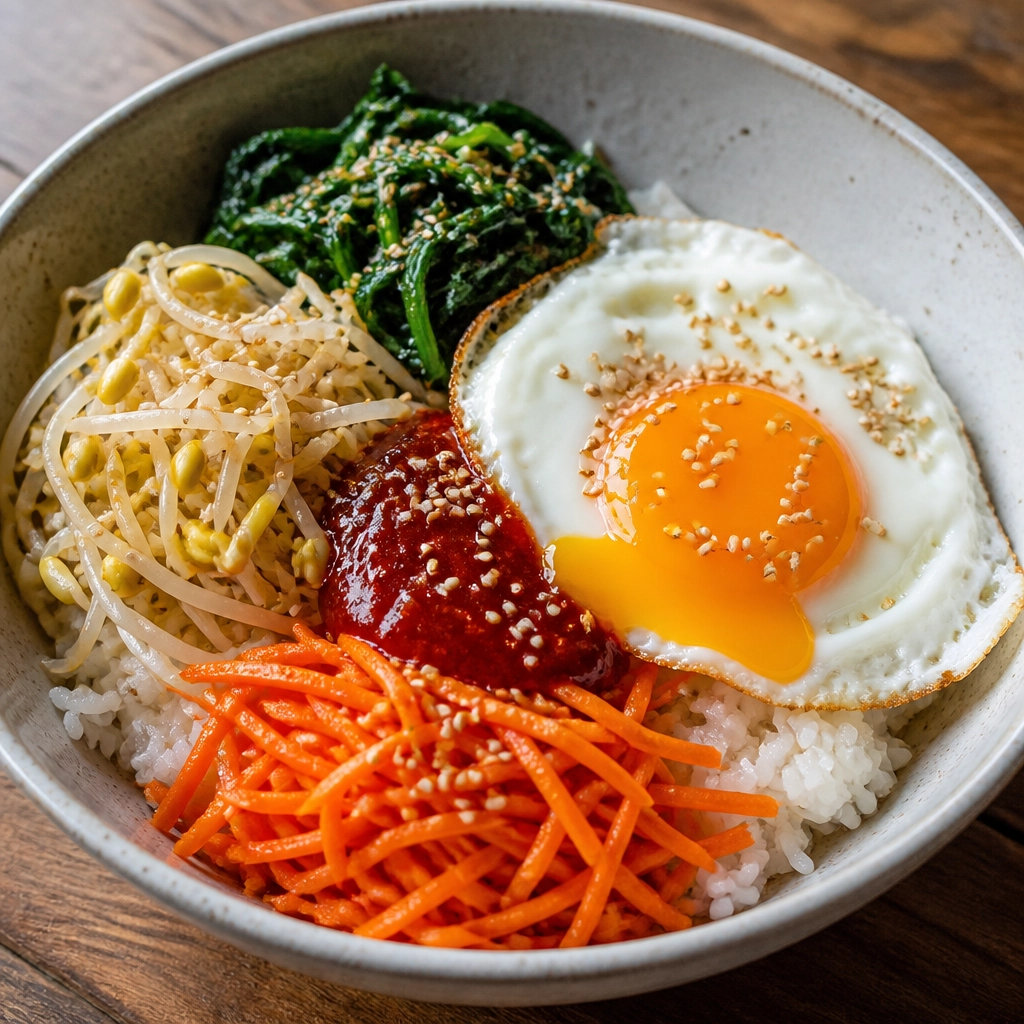
Bibimbap
This bibimbap is a quick, home-style bowl of warm rice topped with lightly seasoned bean sprouts, spinach, sweet carrot, and a rich fried egg. A savory-spicy gochujang sauce and nutty sesame finish tie everything together into a comforting, colorful meal.
Nutrition · per serving
Ingredients
16 itemsRice base
Seasoned vegetables
Gochujang sauce
Egg topping
Tips
- •For a true beginner-friendly version, cook all toppings one by one and keep them separate; the visual contrast is part of bibimbap's appeal.
- •If you like more heat, add extra gochujang at the table rather than thinning the sauce less.
- •A few strips of gim (roasted seaweed) or sliced cucumber can be added, but this simple version stays within the 30-minute target.
- •Use freshly cooked warm rice; bibimbap is best when the rice helps slightly wilt and warm the toppings as you mix.
Steps
- 1
Rinse the short-grain white rice in cold water 3 to 4 times until the water is mostly clear. Combine it with the water in a saucepan or rice cooker and start cooking. While the rice cooks, prepare the toppings.
180 g short-grain white rice240 ml water - 2
Bring a small pot of water to a boil. Blanch the bean sprouts for 1 minute until just tender but still crisp, then drain well. In the same water, blanch the spinach for 30 seconds until wilted, then drain and squeeze out excess water so it seasons properly instead of becoming watery.
200 g bean sprouts120 g spinach - 3
Season the bean sprouts with half of the minced garlic, 5 ml of the soy sauce, 5 ml of the toasted sesame oil, and half of the toasted sesame seeds. Toss the spinach with the remaining half of the minced garlic, 5 ml of the soy sauce, 5 ml of the toasted sesame oil, and a pinch of the remaining toasted sesame seeds.
200 g bean sprouts120 g spinach2 cloves garlic, minced20 ml soy sauce20 ml toasted sesame oil10 g toasted sesame seeds - 4
Julienne the carrot finely. Heat a frying pan over medium-high heat with 5 ml of the neutral oil and stir-fry the carrot for 2 to 3 minutes until slightly softened but still bright and lightly crisp. Remove to a plate.
120 g carrot10 ml neutral oil - 5
In a small bowl, mix the gochujang, 10 ml soy sauce, 5 ml toasted sesame oil, warm water, and sugar into a spoonable sauce. Adjust with a few drops more water if you want it looser for easier mixing at the table.
40 g gochujang10 ml soy sauce5 ml toasted sesame oil15 ml warm water5 g sugar - 6
When the rice is done, let it stand covered for 5 minutes, then fluff it gently so the grains stay distinct. Resting helps the moisture redistribute and keeps the bowl from becoming gummy.
180 g short-grain white rice - 7
Heat the same frying pan over medium heat with the remaining 5 ml neutral oil. Fry the eggs until the whites are set and the yolks are still runny; a runny yolk enriches the sauce when mixed into the rice.
2 eggs10 ml neutral oil - 8
Divide the rice between 2 bowls. Arrange the seasoned bean sprouts, spinach, and carrot in separate sections over the rice, spoon the gochujang sauce on top or serve it alongside, and finish each bowl with a fried egg and the remaining toasted sesame seeds. Serve immediately and mix everything together before eating.
180 g short-grain white rice200 g bean sprouts120 g spinach120 g carrot40 g gochujang2 eggs10 g toasted sesame seeds
Origin & History
Bibimbap is one of Korea's best-known rice dishes, built around the idea of combining rice with assorted seasoned vegetables, sauce, and often egg or meat. Its name literally means 'mixed rice,' and regional and household variations are common across Korea. The dish reflects the Korean tradition of balancing color, texture, and flavor in a single bowl.
Do even more with Gourmate
Cook this recipe in Gourmate — your AI meal planning app.
Plan Meals
Weekly planner at a tap
Ask Questions
Chat with your AI chef
Adjust Recipe
Scale servings & swap ingredients
Cook Mode
Step-by-step guidance
Kitchen Timers
Built-in timers & alerts
Grocery List
Auto-generated shopping lists