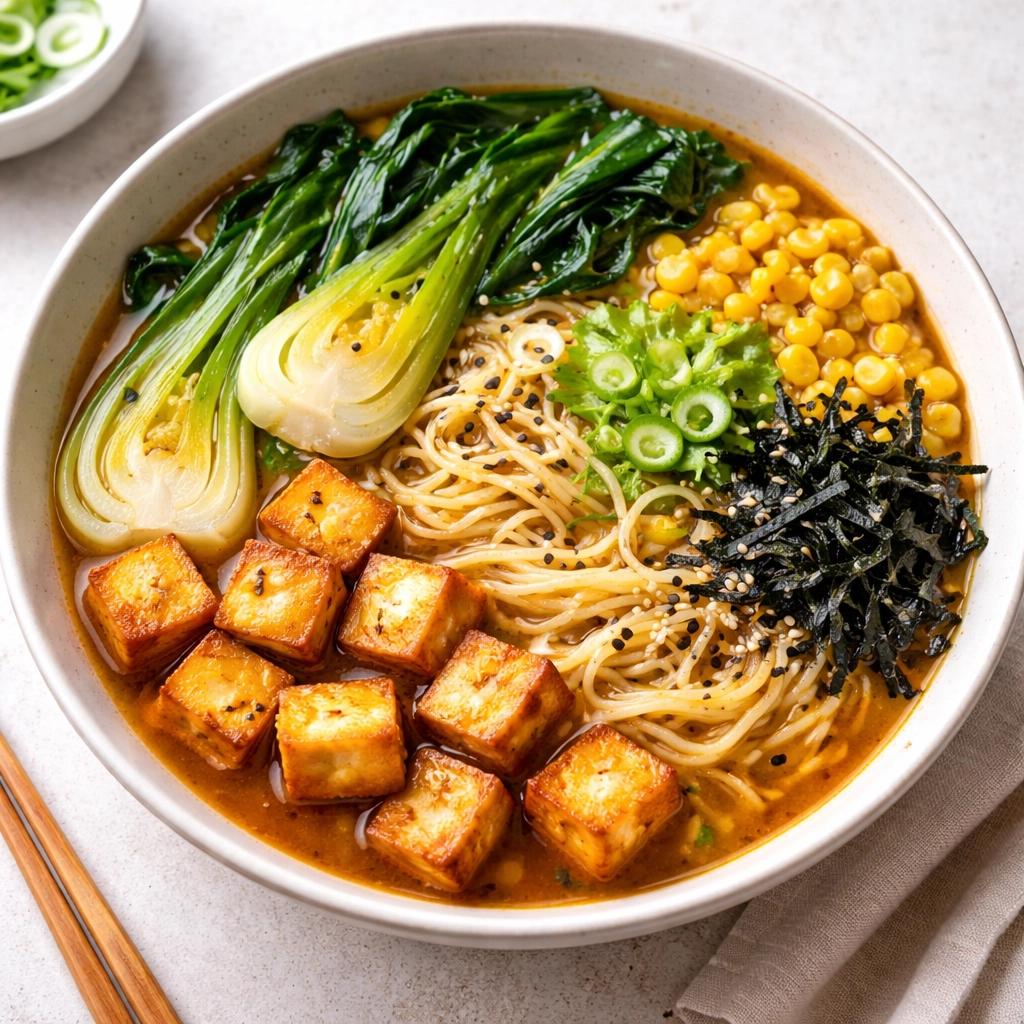
Miso Ramen
This bowl is deeply savoury and comforting, with a fragrant kombu-shiitake broth enriched by sweet white miso and earthy red miso. Springy ramen noodles, golden tofu, tender bok choy, sweetcorn, and nori make it hearty, balanced, and satisfying.
Nutrition · per serving
Ingredients
22 itemsKombu-shiitake broth
Miso tare
Tofu and vegetable toppings
Noodles and finish
Tips
- •If you have time, soak the kombu and shiitake for 30 minutes or overnight in the fridge for an even deeper broth; reduce active prep accordingly.
- •Fresh ramen noodles are ideal, but dried ramen noodles work too; use about 160-180 g dried total and adjust boiling time.
- •For extra richness, add 1-2 teaspoons of vegan chilli oil at the table.
- •Use gluten-free ramen and gluten-free tamari instead of soy sauce if needed, but then the dish would no longer contain gluten if all components are certified gluten-free.
Steps
- 1
Start the broth: combine the water, kombu, dried shiitake mushrooms, garlic, ginger, spring onions, and soy sauce in a saucepan. Let it stand for 10 minutes while you prepare the toppings; this quick soak helps extract flavour within the 45-minute timeframe.
1.4 litres water15 g kombu20 g dried shiitake mushrooms3 cloves, lightly crushed garlic20 g, sliced fresh ginger2, cut into 5 cm lengths spring onions20 ml soy sauce - 2
Prepare the miso tare in a bowl by mixing the white miso, red miso, soy sauce, toasted sesame oil, and mirin until smooth. If needed, loosen it with 1-2 tablespoons of broth later so it blends evenly into the soup.
60 g white miso20 g red miso15 ml soy sauce10 ml toasted sesame oil15 ml mirin - 3
Pat the tofu dry and cut into 1.5 cm cubes. Heat the neutral oil in a non-stick frying pan over medium-high heat and pan-fry the tofu for 6-8 minutes, turning occasionally, until lightly golden on several sides. Season with a tiny pinch of the fine salt.
200 g firm tofu10 ml neutral oil2 g, plus extra for noodle water if needed fine salt - 4
Add the bok choy to the tofu pan for the last 2 minutes, cut side down first, until just wilted but still bright. Warm the sweetcorn in the same pan for 30-60 seconds. Remove everything and keep warm.
200 g, halved lengthwise if large bok choy120 g sweetcorn kernels - 5
Bring the broth to a bare simmer over medium heat, then immediately remove the kombu before the liquid boils; boiling kombu can make the broth slimy and harsh. Continue simmering gently for 15 minutes to infuse the mushrooms and aromatics.
15 g kombu - 6
Strain the broth into a clean pot, pressing lightly on the shiitake and aromatics to extract liquid. Return the broth to low heat. Stir in the rice vinegar and taste; it should be savoury and rounded, since the miso tare will add more salt and body.
10 ml rice vinegar - 7
Bring a separate pot of water to the boil and cook the fresh ramen noodles according to package timing, usually 2-3 minutes, until springy and just cooked. Drain well and avoid rinsing so the broth clings properly.
260 g fresh ramen noodles - 8
Whisk the miso tare into the hot broth off the heat or over very low heat, stirring until fully dissolved. Do not boil once the miso is added, or its aroma and complexity will dull. Taste and adjust with a little extra hot water or a pinch of salt only if necessary.
60 g white miso20 g red miso15 ml soy sauce10 ml toasted sesame oil15 ml mirin2 g, plus extra for noodle water if needed fine salt - 9
Divide the noodles between 2 warmed bowls. Ladle over the miso broth, then arrange the tofu, bok choy, and sweetcorn on top. Finish with nori, sliced spring onions, and toasted sesame seeds. Serve immediately while the noodles are bouncy and the broth is steaming hot.
260 g fresh ramen noodles200 g firm tofu200 g, halved lengthwise if large bok choy120 g sweetcorn kernels1 sheet, cut into strips nori2, thinly sliced spring onions10 g toasted sesame seeds
Origin & History
Miso ramen is strongly associated with Hokkaido, especially Sapporo, where robust, warming bowls became popular in Japan's colder north. Vegan versions build on the same structure of tare, broth, noodles, and toppings, using kombu and shiitake to create the deep umami traditionally supplied by animal-based stocks.
Do even more with Gourmate
Cook this recipe in Gourmate — your AI meal planning app.
Plan Meals
Weekly planner at a tap
Ask Questions
Chat with your AI chef
Adjust Recipe
Scale servings & swap ingredients
Cook Mode
Step-by-step guidance
Kitchen Timers
Built-in timers & alerts
Grocery List
Auto-generated shopping lists