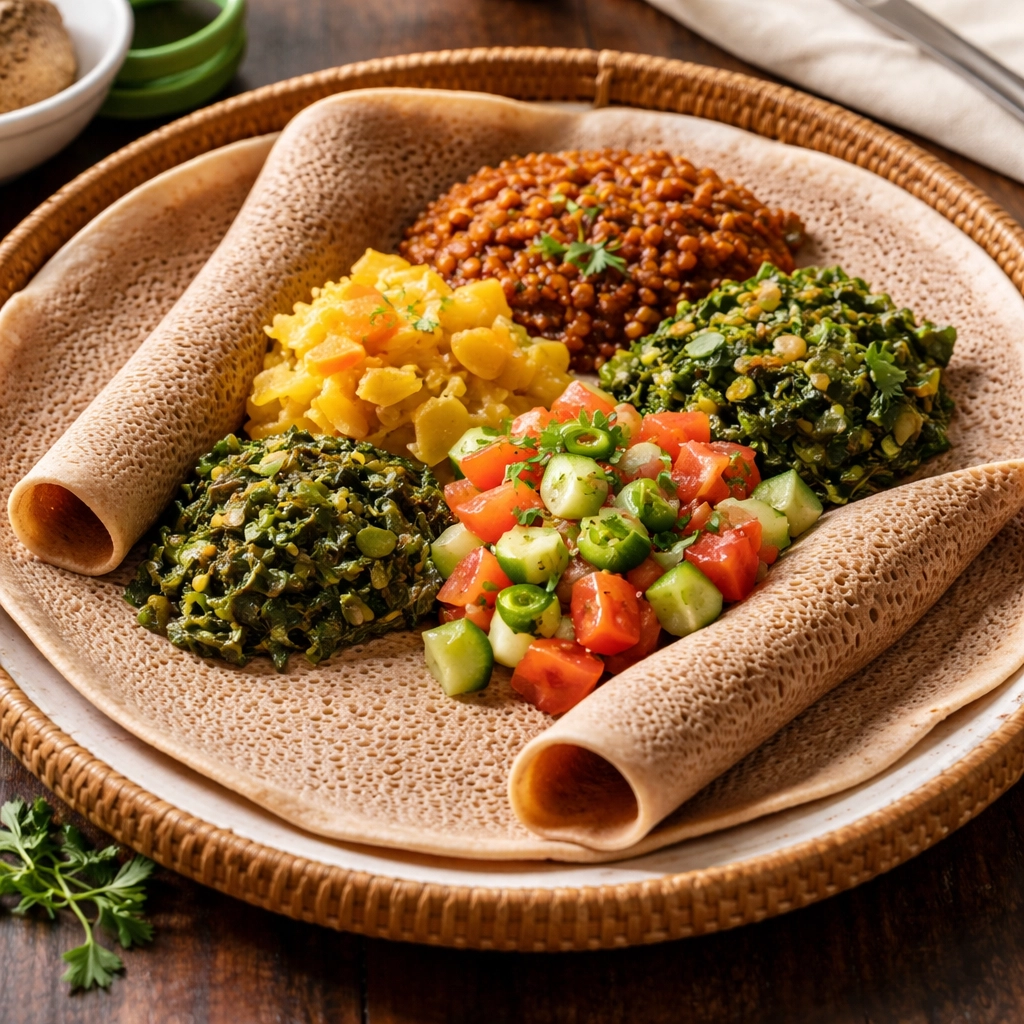
Injera
Injera is a soft, spongy flatbread with a pleasantly tangy flavor and a surface full of tiny holes that eagerly soak up stews and sauces. This quick version keeps the signature supple texture and earthy teff character while making it achievable on a short schedule.
Nutrition · per serving
Ingredients
6 itemsFermented batter
Final batter
Tips
- •Traditional injera is naturally fermented for 2-3 days and develops a deeper sour flavor; this fast method is designed to fit the time limit.
- •If your batter seems too thick, the characteristic 'eyes' will be sparse; thin it a little more with warm water.
- •Cook injera only on one side. A lid is essential because the top sets from trapped steam rather than direct contact with the pan.
- •Pure teff injera is gluten-free by ingredient, but check your flour for cross-contamination if needed.
Steps
- 1
In a medium bowl, whisk the teff flour, warm water, and instant yeast into a smooth batter with no dry pockets. Cover loosely and let it stand in a warm place until slightly risen and lightly bubbly. For a quick version, this takes about 20 minutes; the flavor will be milder than a traditional multi-day fermentation.
200 g teff flour320 ml warm water2 g instant yeast - 2
Stir the batter. It should be pourable, like thin pancake batter. Mix in the salt, then add enough of the extra warm water to reach a consistency that flows easily but is not watery.
4 g salt40-80 ml warm water - 3
Heat a large nonstick skillet or flat griddle over medium heat until evenly hot. Lightly wipe with the neutral oil; use only a very thin film so the surface is not greasy.
5 ml neutral oil - 4
Pour in about half the batter, starting at the outer edge and spiraling inward to form a round about 22-24 cm wide. Immediately cover with a lid and cook without flipping for 2-3 minutes, until the surface is covered with tiny holes, the top looks set rather than wet, and the edges release easily.
- 5
Lift the injera out carefully and let it cool for 1 minute on a clean towel or rack so steam can escape and the surface stays supple. Repeat with the remaining batter for the second injera, adjusting the heat if needed: too hot and it browns before bubbles form; too cool and it turns dense.
- 6
Serve the injera warm or at room temperature, folded or laid flat. Use it as both plate and utensil for wats, lentils, or vegetable stews.
Origin & History
Injera is the foundational flatbread of Ethiopia and Eritrea, where it serves as both staple food and communal eating surface. Traditionally made from teff and fermented over several days, it is central to everyday meals and shared dining customs. Its characteristic sourness and lace-like surface are hallmarks of the bread.
Do even more with Gourmate
Cook this recipe in Gourmate — your AI meal planning app.
Plan Meals
Weekly planner at a tap
Ask Questions
Chat with your AI chef
Adjust Recipe
Scale servings & swap ingredients
Cook Mode
Step-by-step guidance
Kitchen Timers
Built-in timers & alerts
Grocery List
Auto-generated shopping lists