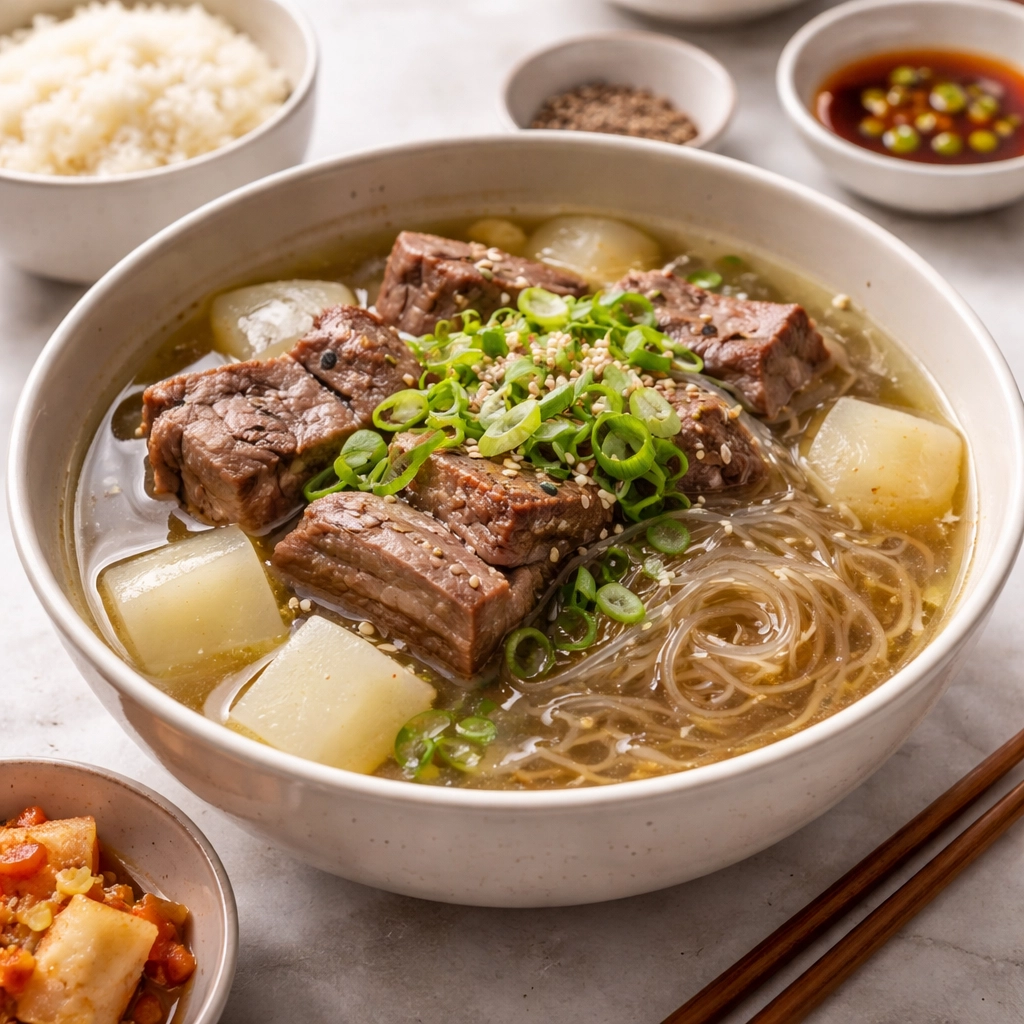
Galbitang
Galbitang is a soothing, clear beef short rib soup with a delicate but rich broth, tender meat, and sweet chunks of daikon. In this streamlined version, chewy glass noodles and fresh spring onion make it substantial enough for a complete meal while keeping the classic comforting character of the dish.
Nutrition · per serving
Ingredients
12 itemsBroth and beef
Noodles and garnish
Tips
- •If you have time, soaking the ribs in cold water for 20-30 minutes before blanching will draw out more blood and make the broth even clearer, but it is optional for a 60-minute version.
- •Choose meaty short ribs cut relatively thin across the bone for this faster recipe; very thick pieces will need longer simmering.
- •For a more traditional restaurant-style finish, serve with steamed rice and small dishes of salt, pepper, and soy sauce on the side so each person can season their bowl.
- •Do not boil aggressively after the initial blanching step; a gentle simmer keeps the broth clearer and the meat more tender.
Steps
- 1
Rinse the beef short ribs under cold running water. Put them in a pot, cover with fresh water, bring to a full boil for 5 minutes, then drain and rinse the ribs and pot to remove scum. This quick blanch keeps the broth clearer and cleaner-tasting.
700 g beef short ribs, bone-in, flanken or English-cut - 2
Return the cleaned ribs to the pot with 1.8 L water, the crushed garlic, and the spring onion whites. Bring to a gentle boil, then immediately lower to a steady simmer. Skim any foam for the first few minutes so the broth stays clear.
700 g beef short ribs, bone-in, flanken or English-cut1.8 L water6 garlic cloves, lightly crushed2 spring onions spring onion whites, cut into 5 cm lengths - 3
Simmer for 30 minutes, partially covered, then add the daikon. Continue simmering for 15-18 minutes until the meat is tender enough to pull from the bone with a little resistance and the daikon is translucent at the edges and easily pierced with a knife.
250 g daikon, peeled and cut into 3 cm chunks - 4
While the soup cooks, soak the glass noodles in warm water for 10 minutes if your brand requires it, then drain. If the package says no soaking is needed, simply rinse them briefly. Prepping them separately prevents overcooking.
60 g sweet potato glass noodles (dangmyeon) - 5
Remove and discard the spring onion whites and garlic if desired for a cleaner presentation. Season the broth with salt and black pepper. Taste: galbitang should be savory but still gentle, with seasoning light enough that diners can adjust at the table.
6 g fine salt1 g black pepper - 6
Add the drained glass noodles to the simmering soup and cook for 4-5 minutes, or until slippery, translucent, and tender but still pleasantly chewy.
60 g sweet potato glass noodles (dangmyeon) - 7
Divide the ribs, daikon, broth, and noodles between 2 hot bowls. Finish each bowl with sliced spring onion greens, a few drops of sesame oil, soy sauce to taste, and extra black pepper. Serve immediately while steaming hot.
2 spring onions spring onion greens, thinly sliced5 ml toasted sesame oil15 ml soy sauce1 g extra black pepper, to serve
Origin & History
Galbitang is a classic Korean clear soup made from beef short ribs, prized for its clean yet deeply beefy flavor. It has long been served for family meals, special occasions, and as restorative food, often with rice and simple seasonings on the side. Traditional versions can simmer for several hours, but home cooks also make shorter versions using smaller-cut ribs.
Do even more with Gourmate
Cook this recipe in Gourmate — your AI meal planning app.
Plan Meals
Weekly planner at a tap
Ask Questions
Chat with your AI chef
Adjust Recipe
Scale servings & swap ingredients
Cook Mode
Step-by-step guidance
Kitchen Timers
Built-in timers & alerts
Grocery List
Auto-generated shopping lists