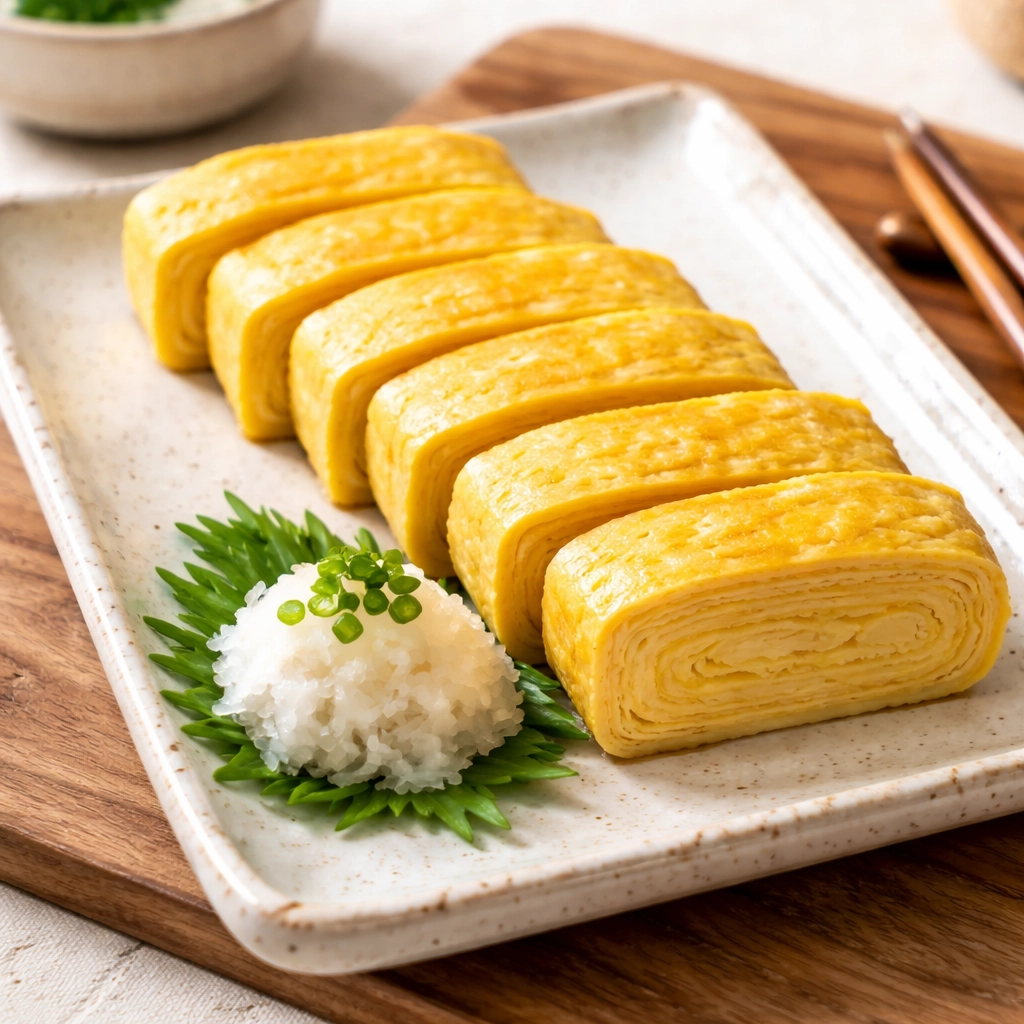
Tamagoyaki
Tamagoyaki is a tender rolled omelette with fine layers and a balanced sweet-savoury flavour from dashi, soy, and mirin. Light, juicy, and neatly sliced, it is simple in ingredients yet elegant in technique.
Nutrition · per serving
Ingredients
8 itemsEgg mixture
For the pan
To serve
Tips
- •A rectangular tamagoyaki pan gives the most traditional shape, but a small round nonstick pan also works; just shape the roll as you go.
- •Keep the heat at medium-low: if the egg browns too fast, the sugar in the mixture can make it stick and toughen.
- •Straining the egg mixture is a small step that makes a noticeable difference in texture.
- •For a slightly sweeter style, increase the sugar to 10 g; for a more savoury style, reduce it to 5 g.
Steps
- 1
Crack the eggs into a bowl. Add the dashi, mirin, soy sauce, sugar, and salt, then beat gently with chopsticks or a fork until fully combined without creating too much foam. Strain through a fine sieve into a jug or bowl with a pouring lip for a smoother, more delicate omelette.
4 large (about 220 g without shells) eggs30 ml dashi10 ml mirin5 ml soy sauce8 g sugar1 g fine salt - 2
Preheat a tamagoyaki pan or small nonstick frying pan over medium-low heat. Lightly oil the pan, including the corners and sides; wipe away excess with folded kitchen paper so only a thin film remains. A lightly greased pan helps each layer bond without frying hard.
10 ml neutral oil - 3
Pour in just enough egg mixture to thinly coat the base, about one quarter of the mixture. Tilt the pan so it spreads evenly. As soon as the surface is mostly set but still slightly glossy, lift the far edge and roll the egg toward you into a neat log. If bubbles form, prick them quickly so the layers stay even.
4 large (about 220 g without shells) eggs30 ml dashi10 ml mirin5 ml soy sauce8 g sugar1 g fine salt - 4
Push the rolled egg back to the far side of the pan. Re-oil the exposed surface lightly. Pour in another thin layer of egg mixture, lifting the roll so some liquid runs underneath it; this helps the new layer attach. When nearly set, roll again toward you to wrap the first log in the new layer.
10 ml neutral oil4 large (about 220 g without shells) eggs30 ml dashi10 ml mirin5 ml soy sauce8 g sugar1 g fine salt - 5
Repeat the layering and rolling process 2 more times until all the egg mixture is used and you have a plump rectangular roll. Cook gently; the tamagoyaki should stay tender and moist, not browned deeply. If needed, press the sides lightly with a spatula to square the shape.
10 ml neutral oil4 large (about 220 g without shells) eggs30 ml dashi10 ml mirin5 ml soy sauce8 g sugar1 g fine salt - 6
Transfer the omelette to a board or sushi mat. Let it rest for 1 minute so the layers settle and slicing is cleaner. Slice into 6 to 8 pieces.
- 7
Serve warm or at room temperature with finely grated daikon on the side.
60 g daikon radish, finely grated
Origin & History
Tamagoyaki is a classic Japanese rolled omelette served in home cooking, bento boxes, and sushi restaurants. Its seasoning varies by region and purpose, from sweeter Kansai-style versions to more savoury dashi-rich preparations often used in sushi. The layered rolling technique reflects the Japanese emphasis on precision and delicate texture.
Do even more with Gourmate
Cook this recipe in Gourmate — your AI meal planning app.
Plan Meals
Weekly planner at a tap
Ask Questions
Chat with your AI chef
Adjust Recipe
Scale servings & swap ingredients
Cook Mode
Step-by-step guidance
Kitchen Timers
Built-in timers & alerts
Grocery List
Auto-generated shopping lists