
Ultra-Processed Foods: What They Are and Why They Matter
The NOVA classification, the research behind why ultra-processed foods drive overeating, and what that means in practice for home cooking and meal planning.
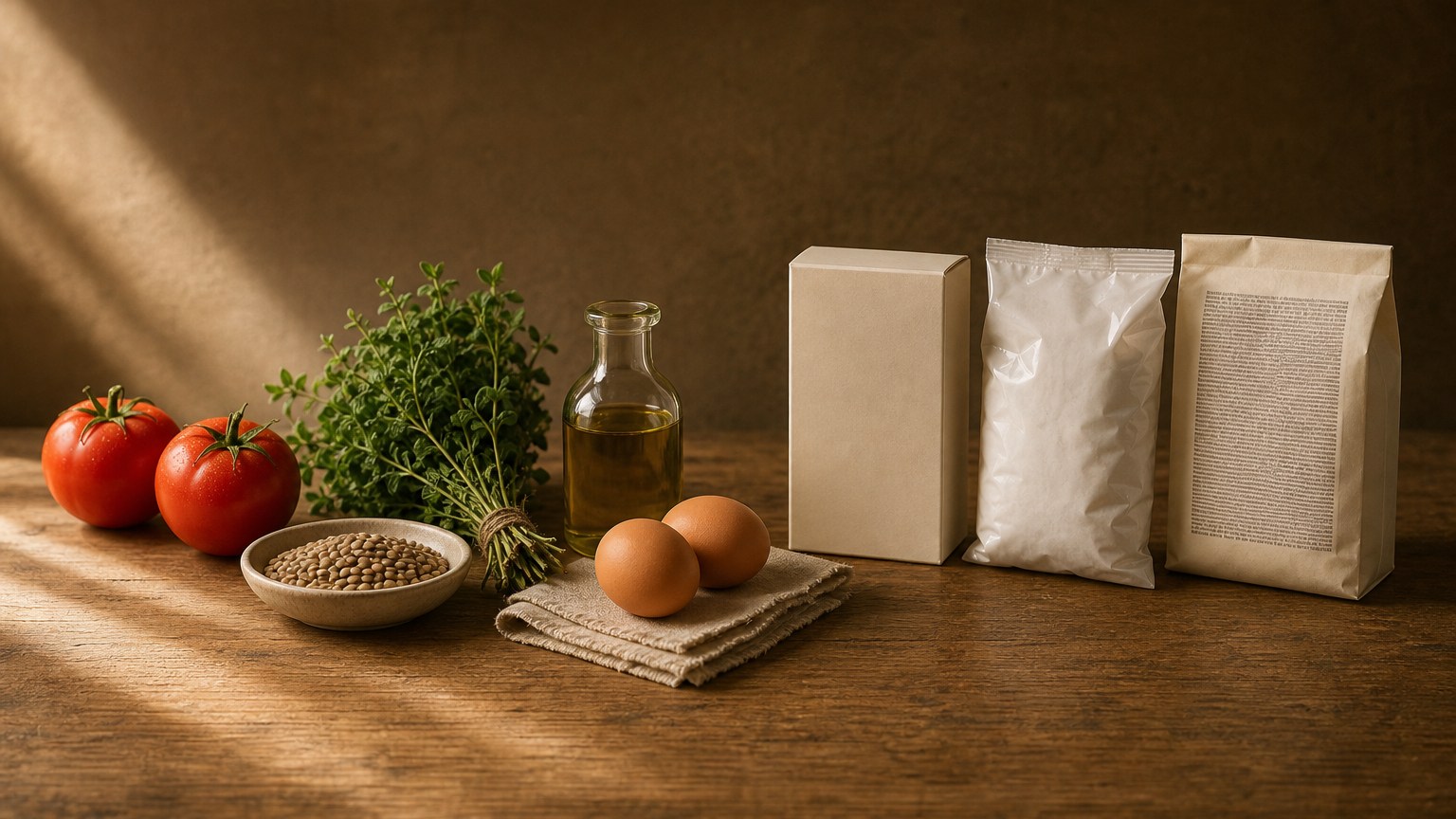
Most people have an intuitive sense that a home-cooked dinner is "better" than a ready meal or fast food. The research behind that intuition has sharpened considerably over the last decade, and it centres on a specific category of food that nutritionists now call ultra-processed.
Understanding what the term means, what it doesn't mean, and what the evidence actually shows is useful if you're thinking about food choices, and it's more specific than the general "eat less processed food" advice you've heard before.
The NOVA classification
The term comes from a Brazilian researcher, Carlos Monteiro, who developed the NOVA classification in the 2000s to group foods not by nutrients but by how they were made. The framework, most recently detailed in a 2019 paper in Public Health Nutrition, divides all foods into four groups:
Group 1: Unprocessed or minimally processed foods: fruit, vegetables, meat, eggs, milk, legumes, plain nuts, and similar foods that have been cleaned, dried, chilled, or otherwise handled without adding substances.
Group 2: Processed culinary ingredients: olive oil, butter, flour, salt, sugar, vinegar, and other substances extracted from Group 1 foods and used for cooking.
Group 3: Processed foods: foods made from Groups 1 and 2, such as canned fish, cheese, cured meats, pickled vegetables, and freshly baked bread with only standard ingredients. These are processed but recognisably made of food.
Group 4: Ultra-processed foods: industrial formulations that contain ingredients rarely or never found in home kitchens. These include emulsifiers (such as lecithin, DATEM, and carrageenan), flavour enhancers, synthetic colours, hydrogenated oils, modified starches, hydrolysed vegetable proteins, maltodextrin, and high-fructose corn syrup. The defining characteristic is not simply that they contain additives, but that they are assembled from substances derived from food rather than made from food in a recognisable way.
Examples of Group 4: mass-market sliced bread that contains emulsifiers and dough conditioners, reconstituted chicken products (nuggets, processed chicken slices), commercial breakfast cereals with more than minimal ingredients, most ready meals, soft drinks, packaged snack foods, flavoured yogurts made from concentrates.
What is NOT ultra-processed just because it contains added salt, sugar, or vinegar: tinned tomatoes, jam, pickled cucumbers, most cheeses, plain canned beans.
What the research shows
The most significant piece of evidence is a randomised controlled trial published in Cell Metabolism in 2019 by Hall et al., notable because randomised trials are rare in nutrition research, which usually relies on observational data.
Twenty healthy adults were admitted to a clinical facility and randomly received each diet in sequence (a crossover design) for two weeks. The researchers provided food ad libitum and designed both diets to be matched in presented total calories, sugar, fat, carbohydrates, and fibre. The ultra-processed diet supplied roughly 83% of energy from Group 4 foods; the unprocessed diet supplied Group 1–3 foods only.
The result: participants on the ultra-processed diet consumed approximately 500 more calories per day compared to their unprocessed-diet period and gained about 0.9 kg; in the unprocessed period they lost the same amount.
The trial also observed that participants ate faster during the ultra-processed weeks. This is a measured difference, not an established causal pathway; faster eating is one plausible contributor to the higher intake, but the trial was not designed to isolate that mechanism.
Other research shows consistent associations. The large French NutriNet-Santé cohort (Fiolet et al., 2018, The BMJ) followed approximately 105,000 adults and found that a 10 percentage-point increase in the proportion of ultra-processed foods (by weight) was associated with a 12% higher adjusted relative risk of overall cancer incidence. This is an observational study: association, not causation, and confounders can never be fully ruled out. Similar prospective associations with cardiovascular disease and all-cause mortality have been reported in other large cohort studies, though each carries the same observational caveat.
What counts in practice
The NOVA definition matters here because it's more useful than "has a long ingredient list." Salt, vinegar, and sugar are not ultra-processing. An artisan sourdough with flour, water, salt, and starter is Group 3. A supermarket loaf that also contains DATEM, ascorbic acid, and soya lecithin is Group 4.
In practice, the ingredients list is the simplest diagnostic. If you recognise everything on it as a food or standard culinary ingredient, it's probably Group 1–3. If the list includes emulsifiers by E-number, modified starches, flavour enhancers, or stabilisers you wouldn't find in a home kitchen, it's likely Group 4.
This isn't an argument for absolute avoidance. The Hall et al. trial put participants on a diet that was roughly 83% ultra-processed, which is an extreme. The more practical implication is that the proportion in the overall diet matters: a diet where most calories come from minimally processed food is likely to support satiety better than one dominated by Group 4 products, even at similar headline calorie counts.
Home cooking as the practical lever
Cooking more meals from recognisable whole ingredients is the most practical lever here. A dinner of roasted vegetables, lentils, and fish cooked at home will typically sit in NOVA Groups 1-3. That's not a guarantee: a bottled sauce, processed stock, or coated ingredient can push components into Group 4. But starting from unprocessed ingredients by default keeps the proportion low without needing to audit every meal.
The Turkish red lentil soup below is built from Group 1 and 2 ingredients (lentils, vegetables, olive oil, spices). The Greek village salad contains feta, which is typically Group 3 (a processed food, not ultra-processed). Both sit well outside Group 4.
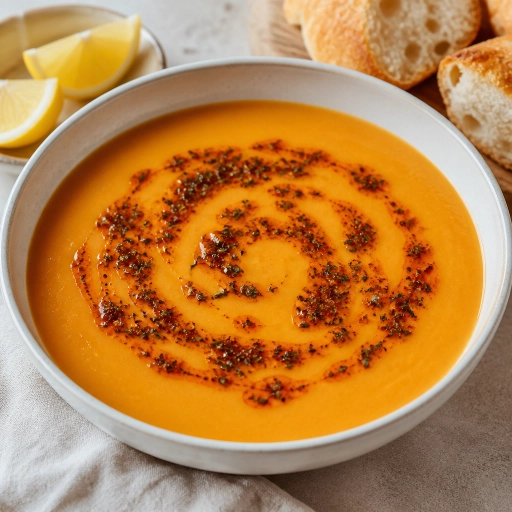
Kirmizi Mercimek Corbasi
This smooth Turkish red lentil soup is comforting, lightly earthy, and brightened with cumin, mint, and lemon. A warm paprika oil drizzled over the top gives it a fragrant finish and a beautiful red-gold sheen.
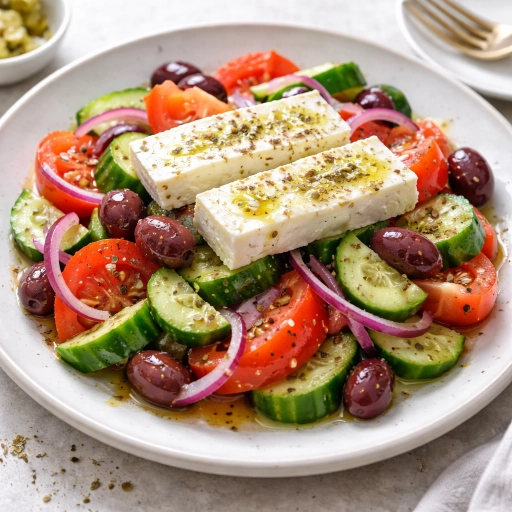
Horiatiki Salata
This crisp, juicy Greek village salad is bright with lemon, fragrant with oregano, and rich from creamy feta and peppery extra-virgin olive oil. Large-cut vegetables and briny olives give it a rustic, satisfying texture that fits perfectly into a keto meal.
If you're managing a health condition where food choices interact with treatment or medication, a GP or registered dietitian should guide your specific approach. The population-level research above applies to diet patterns, not individual prescriptions.
Looking for more whole-food recipes built from recognisable ingredients? Gourmate generates personalised meal plans from scratch, rather than pulling from a fixed list. Find out how the recipe discovery works.