
Air Fryer Recipes: How the Air Fryer Works and What to Cook in It
How an air fryer actually works, which recipes benefit most from it, temperature and timing differences from the oven, and two recipes that show the method at its best.
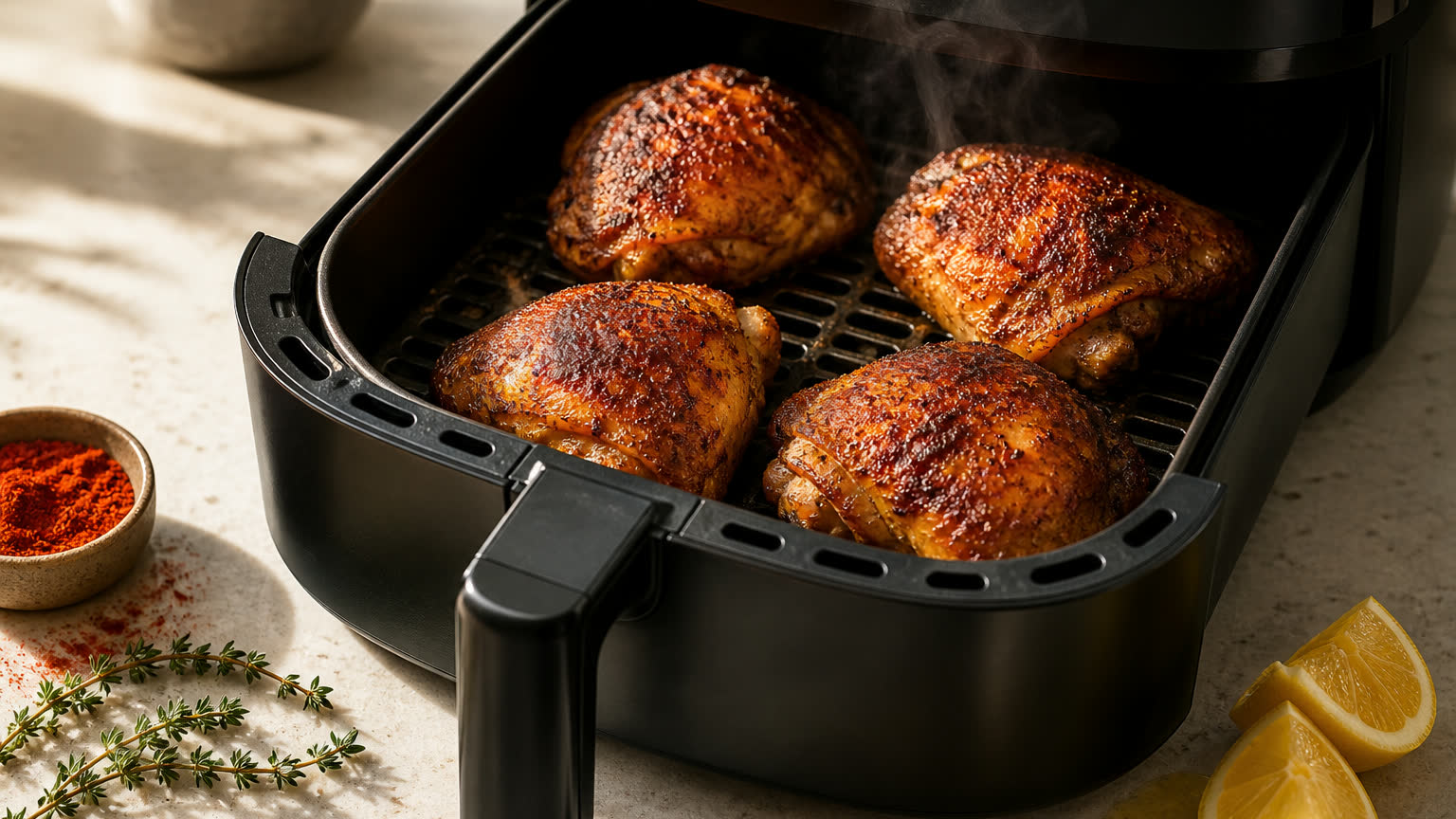
An air fryer is a small, powerful convection oven. That is the entire explanation. Hot air circulates at high speed around the food, cooking from all sides simultaneously and creating a surface that browns and crisps faster than in a conventional oven.
The main practical advantages over a full oven: it preheats in 3-5 minutes instead of 15-20, uses less energy for small batches, and produces crisper results on food with surface fat or coating because the circulating air dries out the surface more efficiently.
The main practical limitation: the basket is small. Most models hold 2-4 servings comfortably; more than that and the food steams rather than crisps because there's not enough air circulation between pieces.
How it actually differs from a regular oven
Standard ovens rely on radiant heat from the top and bottom elements, with some convection from a fan if the convection setting is on. The air fryer forces air at much higher velocity (think industrial-scale fan in a compact space), which does two things: it removes moisture from the food's surface faster and transfers heat more efficiently.
The result: foods that rely on surface drying to crisp (chicken skin, potatoes, battered foods) produce noticeably better results in an air fryer than a standard oven. The skin-to-interior ratio of cooking also changes: the outside gets a head start, producing crispier exteriors without overcooking the interior.
This is why air fryers are particularly effective for:
- Chicken with skin: The skin renders and crisps in ways that require extended oven roasting to match
- Frozen foods: Hash browns, spring rolls, frozen chips: the air fryer matches or exceeds deep-fry texture without the oil
- Vegetable chips and snacks: Kale chips, chickpea crisps: faster and more even than the oven
- Leftovers: Reheating pizza, fried chicken, samosas: the air fryer restores original texture that microwaves destroy
What the air fryer is actually good at
Not all foods benefit equally from air fryer cooking. The biggest wins:
Chicken with skin. Bone-in, skin-on chicken pieces are among the best things you can cook in an air fryer. The skin renders and crisps in ways that are hard to replicate in a regular oven without extended cooking. Wings, thighs, and drumsticks all work well.
Vegetables with low moisture content. Broccoli, cauliflower, Brussels sprouts, asparagus, and green beans all develop roasted edges in the air fryer quickly and without getting waterlogged. High-moisture vegetables (courgette, aubergine) benefit less because they release moisture faster than the air fryer can remove it.
Reheating fried food. This is where the air fryer genuinely beats the microwave. Pizza, fried chicken, spring rolls, chips: the air fryer restores crispness that the microwave destroys.
Toasted seeds and nuts. 2-3 minutes at 160°C produces evenly toasted seeds without burning them as easily as stovetop toasting.
Temperature and time differences from the oven
Because the air fryer circulates air at much higher speeds than a conventional oven, heat transfer is faster. As a general rule:
- Reduce temperature by 10-15°C compared to oven recipes
- Reduce time by 20-25% compared to oven recipes
- Check doneness earlier than the recipe specifies
So an oven recipe that says "200°C for 25 minutes" often becomes "185-190°C for 18-20 minutes" in an air fryer. These are approximations: air fryer models vary, and the batch size affects the result. The first time cooking a new dish in the air fryer, start checking doneness a few minutes early.
The other important difference: food needs space. Don't stack or crowd pieces. A single layer with gaps between pieces is the rule. If the basket is too full, work in batches.
Crispy chicken thighs (no added oil needed)
The air fryer's most convincing result: bone-in chicken thighs with genuinely crackling skin, cooked in under 25 minutes with no oil needed. The skin renders its own fat and crisps in the circulating heat. This takes 30 minutes from cold to plate, including 8 minutes of prep.
The technique: pat the skin completely dry before seasoning. Surface moisture is the enemy of crisp skin. No oil in the basket and no oil on the chicken; the fat under the skin is enough.
The safety check: an instant-read thermometer inserted into the thickest part (not touching the bone) should read 74°C/165°F. Colour alone is not a reliable indicator.
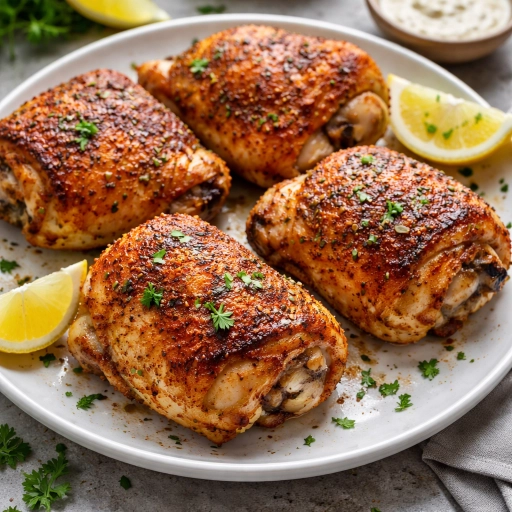
Crispy air-fryer chicken thighs
Bone-in, skin-on chicken thighs seasoned with smoked paprika and aromatics, cooked at high heat in the air fryer until the skin is deeply golden and crackling while the meat stays juicy. Quick, simple, and reliably crispy without added oil.
Buffalo wings (oven or air fryer)
Buffalo wings are a classic air fryer recipe for the same reason as chicken thighs: the skin renders and crisps. An air fryer at 200°C produces wings that rival deep-frying in terms of crispness, with considerably less fat.
This recipe is written for the oven but adapts to the air fryer directly. If using an air fryer: cook at 190°C for 18-20 minutes, turning halfway. Toss in the Buffalo sauce after cooking, not before; sauce added before cooking prevents the skin crisping.
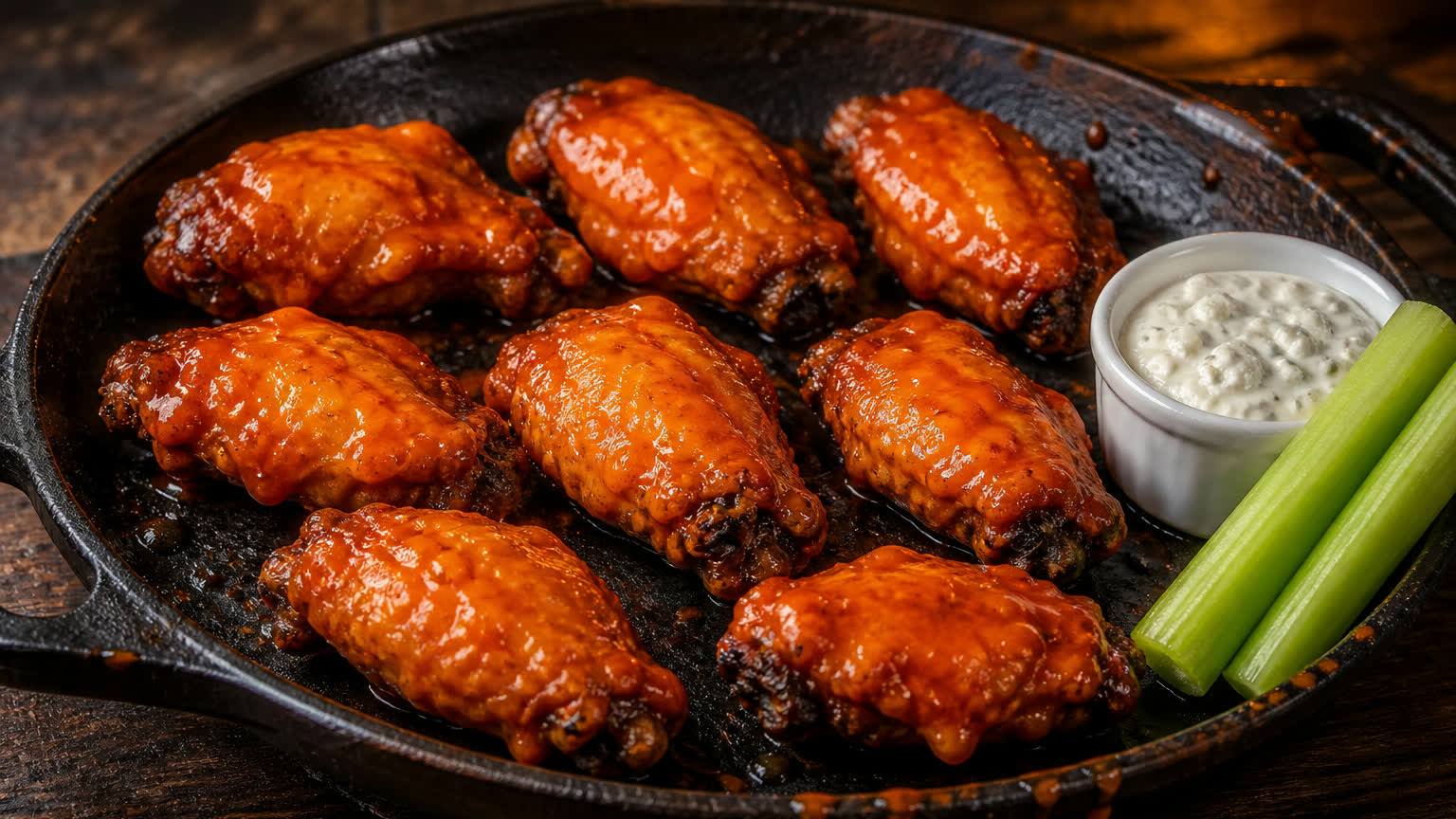
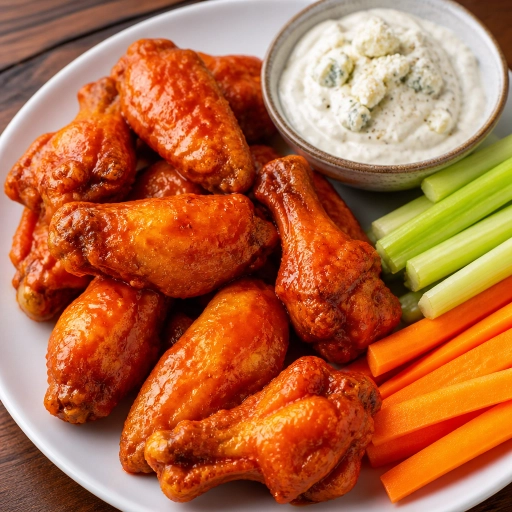
Buffalo Wings
These Buffalo wings come out crisp and deeply golden from the oven, then get coated in a tangy, buttery hot sauce that clings to every bite. Served with cool blue cheese dip and crunchy vegetables, they deliver the classic spicy-creamy contrast with beginner-friendly technique.
Cleaning and maintenance
The basket of an air fryer needs to be washed after every use. Rendered fat from previous batches smokes at high temperature and gives food an off flavour. Most baskets are dishwasher safe; check the manual.
Avoid abrasive sponges on non-stick coatings. A soft cloth or sponge with warm soapy water is enough.
A small amount of smoke on first use is normal. Subsequent smoking usually means accumulated fat in the bottom of the drawer below the basket, which needs to be wiped out.
Allergens and food safety
- Crispy Chicken Thighs: no major regulated allergens
- Buffalo Wings: dairy (butter in the Buffalo sauce), celery (blue cheese dip), milk (blue cheese dip). Check the hot sauce label; some brands add vinegar from wheat.
Cook all chicken to 74°C/165°F internal temperature. Do not rely on colour or timing alone. Wash hands, surfaces, and the basket after raw chicken; cross-contamination risk from raw poultry is significant.
Looking for recipes suited to your cooking equipment? Gourmate personalises suggestions around your kitchen setup. Find out how the recipe discovery works.